

Kullanıcı verilerini koruma altına almak için en gelişmiş şifreleme sistemlerini kullanan bahsegel giriş, gizliliğe önem veren oyuncular için güvenli bir tercihtir.

Kullanıcılarına özel ödül ve geri ödeme programlarıyla bahsegel kazanç sağlar.

Kumarhane deneyimi arayanlar için bahsegel sayfası geniş fırsatlar sunuyor.

Slotlarda kullanılan semboller genellikle tema ile bağlantılıdır; pinco giriş bu görselleri kaliteli şekilde sunar.

Her zaman şeffaf politikalarıyla bilinen bettilt güvenilir bir bahis ortamı sağlar.

These 4 AI Tools Saved Me 20+ Hours a Week—Here’s How to Use Them

[ad_1]

Opinions expressed by Entrepreneur contributors are their own.

Most entrepreneurs are still using AI to save time—but the smartest ones are using it to make money, scale their business, and replace entire departments with digital agents. This isn’t about ChatGPT or surface-level hacks. It’s about using AI Agents—your 24/7 Phantom Workforce—to run key parts of your business while you sleep. In this video, I’ll show you the 4 most powerful AI agents I use to save 20+ hours per week, boost revenue, and scale operations without hiring a single employee.

What You’ll Learn:

  • Revenue Agent: Turn AI into your best-performing sales rep. Discover how tools like Zapier’s Outreach Agent and Salesforce Sales AI can automate lead research, qualification, and follow-ups—so you never miss a sale again.

  • AI Executive Assistant: Inbox overloaded? Calendar a mess? Learn how to reclaim your time with tools like Motion, Reclaim, and Superhuman—AI agents that handle scheduling, approvals, and admin chaos so you can focus on growth.

  • Workflow Agent: Sick of explaining the same SOPs to every new VA? Use tools like Scribehow to auto-document your processes and delegate work in minutes—not hours. Perfect for solopreneurs scaling without the stress.

  • Pulse Agent: This is your always-on marketing analyst. I’ll show you how to use tools like Google AI Studio to analyze, test, and improve your content strategy—before you waste time launching a flop.

These are the exact tools I use to automate key parts of my business and free up my time—and I’ll walk you through each one, step by step.

Download the free ‘AI Success Kit’ (limited time only). And you’ll also get a free chapter from Ben’s brand new book, ‘The Wolf is at The Door – How to Survive and Thrive in an AI-Driven World.’

[ad_2]

Source link
Starbucks Adding New Staff, Says Machines Alone Won’t Cut It

[ad_1]

Starbucks has found that removing human labor in favor of machines doesn’t work for the company — so now the coffee chain is hiring old-fashioned human baristas at thousands of stores.

Starbucks CEO Brian Niccol stated in a call with investors earlier this week that the company’s effort to reduce headcount over the past few years and replace humans with machines had backfired: Advanced machinery proved to be an inadequate substitute for human labor.

“Over the last couple of years, we’ve actually been removing labor from the stores, I think with the hope that equipment could offset the removal of the labor,” Niccol said on the call, per The Guardian. “What we’re finding is that wasn’t an accurate assumption with what played out.”

By the time Niccol joined Starbucks in September 2024, the company had been testing out human staff increases at just a handful of locations. Niccol broadened the effort this year to include 3,000 locations of the coffee chain’s 40,000 stores globally.

Related: ‘We’re Not Effective’: Starbucks CEO Tells Corporate Employees to ‘Own Whether or Not This Place Grows’

Niccol stated that new technology alone doesn’t cut it. Starbucks needed to adequately staff stores and allow employees access to new equipment to deliver a better customer experience.

“Equipment doesn’t solve the customer experience that we need to provide, but rather staffing the stores and deploying with this technology behind it does,” Niccol said on the call.

Niccol noted that increasing staff would entail higher costs but asserted that “some growth” for the company would accompany the move.

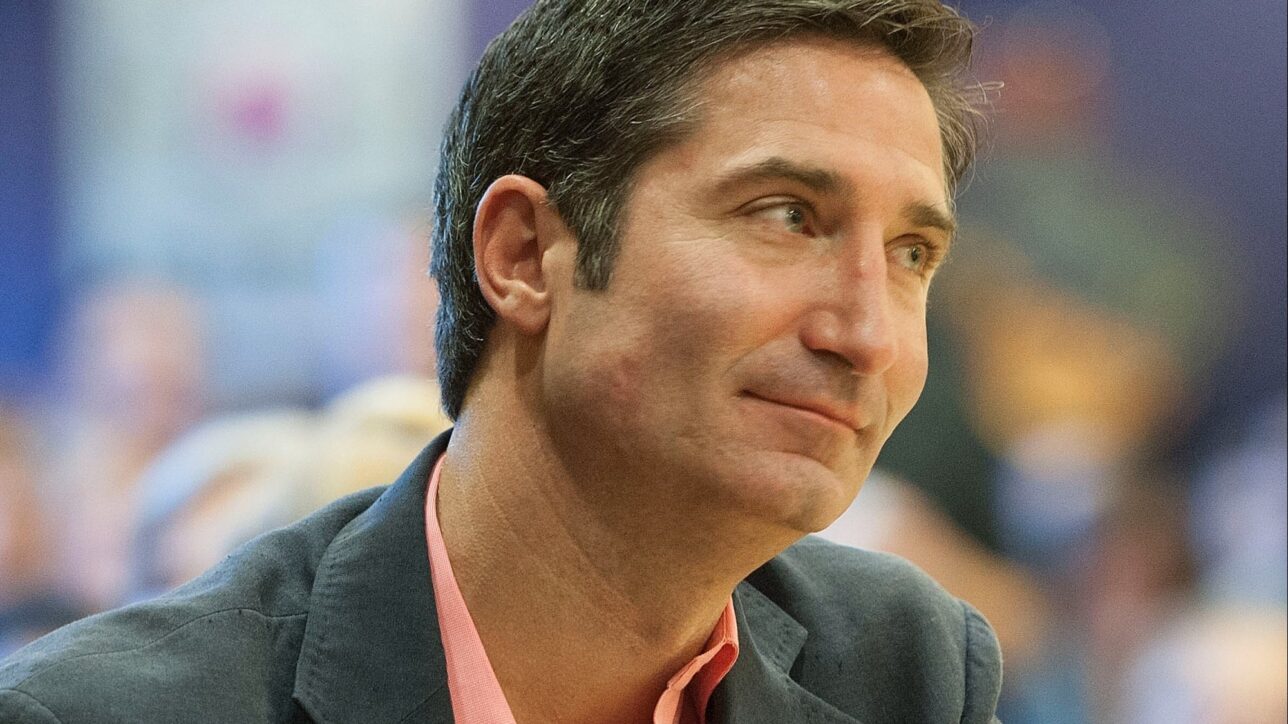
Starbucks CEO Brian Niccol. Photo by Kevin Sullivan/Digital First Media/Orange County Register via Getty Images

The move to hire new baristas is part of Niccol’s plan to turn Starbucks around after five consecutive quarters of declining sales. Starbucks reported on Tuesday that same-store sales dropped 1% in the first quarter of 2025, falling short of Wall Street expectations.

Related: It’s Pay-to-Stay at Starbucks As the Coffeehouse Reverses Its Open Door Policy

Niccol reassured investors on the call that though the financial results proved “disappointing,” Starbucks was “really showing a lot of signs of progress” internally. For example, the average time to deliver in-store orders had declined by an average of two minutes during the quarter, he said.

Niccol’s plan to turn around Starbucks includes limiting the number of items customers can order through mobile, adding ceramic mugs for in-store orders, cutting 30% of the menu, writing customers’ names down with Sharpies on their cups, and asking baristas to make orders in under four minutes. Starting May 12, Starbucks will also require baristas to dress uniformly in a solid black top and khaki, black, or blue denim bottoms.

Starbucks operates 16,941 stores in the U.S. and has 211,000 U.S. employees. The company’s stock was down about 11% year-to-date at the time of writing.

[ad_2]

Source link

Americans Have a Blind Spot When It Comes to Small Business

[ad_1]

Most people feel personally and emotionally connected to the small businesses in their communities, but they underestimate how widespread small businesses are on a broader scale.

That’s according to a new report released Wednesday by digital marketing and automation platform Constant Contact. The report gathered responses from over 8,000 people in the U.S., U.K., Canada, Australia, and New Zealand.

Only 19% of U.S. respondents correctly identified that there were 33 million small businesses in the U.S. Many respondents underestimated the number “by millions,” the report noted. Meanwhile, more than two in five Americans said they would feel “devastated” if their favorite small business closed.

Related: ‘Applications Are Surging’: Small Business Administration Reports Significant Growth in Loan Approvals

Constant Contact CEO Frank Vella said the numbers showed most consumers have “a blind spot” in their awareness of the number of small businesses that exist.

Vella told Entrepreneur in an email that small businesses create a “personal” relationship with their customers. Customers aren’t just buying a product or service, they’re building a relationship.

According to the report, the most popular types of small businesses globally were restaurants, bakeries, grocery stores, retail shops, locally-owned franchises, and personal care or wellness businesses.

“Many of us feel a personal connection to our favorite local businesses, but our research shows a significant awareness gap regarding the prevalence of these businesses,” Vella said. “Failing to recognize small businesses and their critical role in our communities and economies creates a blind spot, which makes it easy to overlook their impact.”

Related: Small Business Owners Are Taking 3 Creative Actions to Achieve Their Goals, According to a New Report

On a global scale, 40% of consumers said they visit a small business at least once a week, and over 80% agreed that small businesses positively affect their lives.

Customers said they supported small businesses because they enjoyed the quality of products and services, the personal customer service, and the local impact. They also said they chose to shop at small businesses because of the sense of community these establishments provided.

Another small business survey released last month from Goldman Sachs found that most small business owners in the U.S. (69%) are optimistic about the financial health of their businesses, and 78% plan to grow their businesses this year. Of the 1,188 businesses surveyed, nearly half (46%) said they expected to create new jobs this year.

[ad_2]

Source link

Duolingo Will Replace Contract Workers With AI, CEO Says

[ad_1]

Duolingo is adopting an “AI-first” approach to its business, and the language learning platform will reduce its reliance on human contract workers as it assigns AI their responsibilities.

In a memo to employees on Monday, Duolingo CEO Luis von Ahn detailed the company’s official “AI-first” stance.

“AI is already changing how work gets done,” Ahn wrote in an email publicly shared through Duolingo’s LinkedIn account. “When there’s a shift this big, the worst thing you can do is wait.”

As part of its AI-first strategy, Duolingo will shift workloads from contractors to AI and “gradually stop using contractors to do work that AI can handle,” per the email. The company will also reward AI use in hiring new employees and in performance reviews of existing employees. Teams will additionally only be permitted to hire new members if the group cannot automate the work.

Related: ‘Make Chess as Accessible as Possible’: Duolingo’s Next Move Is Teaching Users How to Play Chess

Duolingo has eliminated contract workers in favor of AI before. Last year, the company cut 10% of its contractors after reportedly deciding to use AI for translations.

However, Ahn reassured staff in the email that “Duolingo will remain a company that cares deeply about its employees,” and that being AI-first wasn’t about “replacing” workers with AI but about allowing existing employees to focus on creative work and problem-solving over repetitive tasks. The company said that it would support staff with full-time staff training, mentorship, and AI tools.

Duolingo CEO Luis von Ahn. Photo by Kevin Dietsch/Getty Images
Ahn also explained why Duolingo was choosing to go all-in on AI now. He stated in the email that Duolingo bet big on mobile in 2012, focusing on creating a mobile-first app at a time when mobile apps were primarily companions for full-fledged websites. The move worked out well: Duolingo’s app won the 2013 iPhone App of the Year with 10 million downloads and grew organically after that. Now, Duolingo has over 500 million registered users.

“This time the platform shift is AI,” he wrote in the email.

Related: ‘Get 100X the Work Done’: Shopify CEO Tells Employees to Try AI to Get Work Done Before Asking for More Human Workers

Duolingo is focusing on AI by using it to create content and power features like Video Call, which Duolingo introduced in September. Video Call allows learners to practice speaking in their target language through a video chat with an AI character named Lily.

Duolingo isn’t the first company to recently announce an AI-first strategy. Earlier this month, Shopify CEO Tobias Lutke told all employees in a memo that “using AI effectively is now a fundamental expectation of everyone at Shopify.” Lutke told Shopify staff that they should maximize what they could do with AI before asking for more resources or additional human employees.

He also said that Shopify would add AI use questions to its performance and peer reviews.

Duolingo had a market capitalization of over $17 billion at the time of writing.

[ad_2]

Source link

How Much Do Google Employees Make? Median Salaries Revealed

[ad_1]

A mid-level Google employee made $331,894 in 2024, a 5% increase from the median salary of $315,531 in 2023, per a new filing submitted by Google’s parent company, Alphabet, to the U.S. Securities and Exchange Commission.

The figure aligns with compensation at other tech giants in recent years. At Meta, for example, the median pay for employees in 2023 was $379,000 a year.

The filing further showed that Alphabet and Google CEO Sundar Pichai received total annual compensation of $10,725,043 last year, about 32 times more than the median employee. Pichai received a nearly $2 million raise from the $8,802,824 he made in 2023.

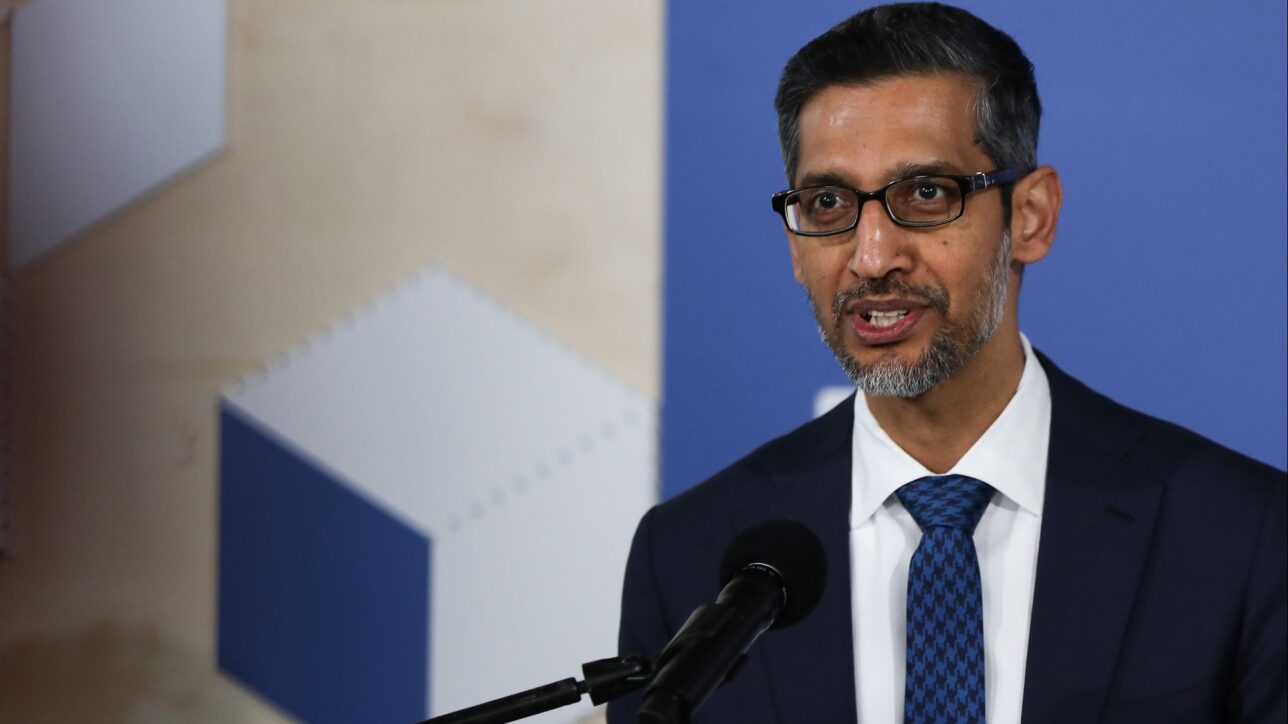
Google CEO Sundar Pichai. Photo by Klaudia Radecka/NurPhoto via Getty Images

The bulk of Pichai’s compensation came from the “All Other Compensation” category, besides his $2,015,385 base salary and $405,630 in stock awards.

The remaining $8,304,028 included Pichai’s personal security costs, which climbed 22% from the $6,775,631 Google paid in 2023 to $8,267,123 in 2024. The category also included his retirement plan and use of company aircraft or cars.

Related: Google CEO Sundar Pichai Says ‘You’ll Be Surprised’ By How Google Search Changes in 2025

“Due to Sundar’s significant public profile, Alphabet provides him with security protection,” Alphabet’s 2025 proxy statement reads. “In 2024, Sundar’s security arrangements included residential security and consultation fees, security monitoring services, car and driver services, and personal security during all travel.”

Alphabet called Pichai’s personal security expenses “reasonable, appropriate, necessary and in the best interests of Alphabet and its stockholders.”

Other tech CEOs also have seven or eight-figure security costs. For example, Meta CEO Mark Zuckerberg’s $27.2 million total compensation in 2024 included a $14 million pre-tax security allowance. Meanwhile, Nvidia spent nearly $2.5 million in 2024 on CEO Jensen Huang’s security costs.

Related: Here’s How Much 8 CEOs Made in 2024, From JPMorgan’s Jamie Dimon to Disney’s Bob Iger

[ad_2]

Source link

Last Chance to Get Windows 11 Pro at an All-Time Low Price

[ad_1]

Disclosure: Our goal is to feature products and services that we think you’ll find interesting and useful. If you purchase them, Entrepreneur may get a small share of the revenue from the sale from our commerce partners.

The majority of Windows users still haven’t upgraded to Windows 11, according to TechSpot. With the clock ticking on support for Windows 10, if you keep waiting to upgrade, you may be stuck without security fixes, technical assistance, or free software updates if you don’t upgrade to Windows 11 Pro ahead of the discontinuation.

To ease the blow, we’ve been selling Windows 11 Pro license keys at an all-time low price of $14.97, but today, April 27, is the last day to get this price (reg. $199).

Up your workday productivity

The changes to Windows 11 Pro include a seamless interface to help you tackle your to-do list more conveniently. Support for biometric login, encrypted authentication, and advanced antivirus defenses are just a few of the features that boost your online security. And improved voice typing and a better search experience aim to save you time and increase your productivity.

With Windows 11 Pro, Microsoft Teams and Widgets capabilities are all built-in. There’s also the addition of Copilot, Windows 11’s AI-powered assistant that answers your questions and serves as your own (unpaid!) personal assistant.

Since you’re always working so hard, you need to make sure you’re playing hard, too. Windows 11 Pro offers unprecedented gaming advantages, with DirectX 12 Ultimate providing incredible graphics so you can play your favorite games in all their splendor.

Before purchasing, make sure this license is the right fit for your computer. This particular Microsoft Windows 11 Pro license requires your device to be running Windows 10 or higher, with a processor of 1GHz or faster, 4GB of RAM and 64GB of storage or larger.

Why this deal is worth it

Upgrading to Windows 11 Pro isn’t just about staying current, it’s about working smarter. With new productivity tools like Snap Layouts for better multitasking, deeper Teams integration for faster communication, and support for multiple virtual desktops, this upgrade can genuinely streamline your day. If your PC is still running Windows 10, you’re not just behind on security, you’re missing out on built-in features designed to help you move faster, focus better, and get more done.

Get Microsoft Windows 11 Pro for just $14.97 through April 27 at 11:59 p.m. PT with no coupon needed.

Microsoft Windows 11 Pro – $14.97

See Deal

StackSocial prices subject to change.

[ad_2]

Source link

Develop a Lifetime of New Skills for Only $20

[ad_1]

Disclosure: Our goal is to feature products and services that we think you’ll find interesting and useful. If you purchase them, Entrepreneur may get a small share of the revenue from the sale from our commerce partners.

Whether you obtained a college degree or not, training programs can be a great way to qualify for a new career or advance in the one you have. Best yet, developing new skills is now convenient and affordable. You can get lifetime access to EDU Unlimited by StackSkills for just $19.97 while the price has dropped from the regular $49.99 sale price.

StackSkills is the premier online platform offering the most in-demand skills today and this exclusive limited-time promotion provides lifetime access to more than 1,000 pre-selected StackSkills courses. Elite, highly rated expert instructors share important lessons learned from both their successes and failures.

From iOS development to growth hacking, blockchain, more than 350 of the web’s best teachers cover skills of all levels, beginner to advanced. New courses are added every month, so you can choose from business, finance, marketing, IT, graphic design and so much more. Course certifications and premium customer support are included.

There’s no longer any need to add another commute to your day, squeeze in classes at inconvenient times or take classes you don’t want or need. Whether you’re a professional, freelancer, parent or student, you’ll love the flexibility of being able to train at your own pace and focus on just the specific skills you need to develop.

Best of all, you get an entire lifetime of education at one extremely budget-friendly price. No college or individual online courses are anywhere nearly as affordable and a variety of courses remain available even if your needs change over the years.

It’s no wonder StackSkills has an impressive Trustpilot rating of 4.6 stars out of 5. As PCWorld noted:

“StackSkills Unlimited gives you a lifetime of professional training for one low price.”

Get lifetime access to EDU Unlimited by StackSkills while the price has dropped to $19.97 until April 27.

StackSocial prices subject to change.

[ad_2]

Source link

Microsoft Surface Ad Is AI-Generated, No One Picked Up On It

[ad_1]

Microsoft released a 56-second ad for the Surface laptop on January 30, and no one realized that it was partially AI-generated until Microsoft disclosed it on Wednesday.

The ad shows different people typing away on a Surface laptop in various locations. It emphasizes the Surface laptop’s standout features, like its touchscreen and battery life.

In the close to three months since the ad’s release, no one has picked up on its AI-generated roots, per The Verge. The ad has over 46,000 views on YouTube, and none of the top comments suspect that the ad was partly AI-generated.

According to a Microsoft Design blog post released Wednesday, Microsoft employees used generative AI tools to cut down the time and expense required to create the ad, putting it together in just a month.

“With a small budget and a tiny amount of time, we were able to accomplish in a month what would have traditionally required exponentially more resources,” Brian Townsend, visual designer on Microsoft’s Windows + Devices Visual Design team, stated in the blog post. “We probably saved 90% of the time and cost it would typically take.”

Related: Apple Issues Apology for iPad Pro ‘Crush!’ Ad and Pulls It from TV — Here’s Why

The team started the process by using unspecified AI tools to create a script, storyboards, and a pitch deck. AI helped expedite the process, allowing the team to get the materials ready in a matter of days instead of weeks.

The team then told an unnamed AI chatbot what they were looking for in the ad. They went through “thousands” of additional prompts to refine the AI output.

Because AI still has trouble generating details like human motion, the team decided to use some human-created shots to fill in the weaknesses of AI-generated shots. They determined that humans had to manually capture shots with “intricate movement,” like closeups of hands typing on keyboards, while AI generated quick cuts or shots with limited motion.

AI allowed the team to display different backgrounds in the ad without having to travel to the location. However, the team acknowledged in the blog post that from time to time, AI tools would experience hallucinations or generate inaccurate responses. When hallucinations arose, the team would manually fix “any unnatural elements” that popped up.

“However, as with all things created using AI, the occasional AI hallucination would rear its head,” the blog post stated. “To combat this, the team employed a blend of AI and traditional video production tools to meticulously compose frames and correct any unnatural elements.”

Related: Google Pulls Gemini AI Olympics Commercial After Backlash

Microsoft emphasized in the blog post that AI democratizes filmmaking and allows anyone to create their own ad or video.

“All it takes is imagination and the curiosity to explore the myriad of tools available,” the blog post reads.

Microsoft did not specify which AI tools they used to generate the ad, though the company’s own tool, Microsoft Copilot, is capable of creating a script, footage, and a video project from a single prompt.

[ad_2]

Source link

Most Coachella Attendees Buy Tickets with Buy Now, Pay Later

[ad_1]

Coachella, the music festival that occurred across two weekends this month, drew crowds of 125,000-plus attendees each day.

A report published by Billboard last week shows that most of the crowd, about 60%, used Coachella’s payment plan system to pay for their $600-and-up tickets. The plan allows attendees access to Coachella with an upfront cost of as little as $49.99.

Tickets started at $649 for the first weekend of Coachella from April 10 through 12 and $600 for the second weekend from April 17 through 19. People reported that tickets used to cost $429 per weekend in 2020. When Coachella started in 1999, tickets were $50.

Related: Jeff Bezos Was Caught on Video Dancing at Coachella, But It’s His ‘$12 Amazon Shirt’ That Has the Internet in Stitches

The festival first began offering the buy-now-pay-later option in 2009, and at the time, only 18% of attendees tapped into it, per People.

Coachella music festival 2025. Credit: Getty Images
Coachella partnered with ticketing company AXS to offer the buy now, pay later payment plan, which enables the festival goer to pay off their ticket over three months. Coachella does not charge interest for the ticket purchase, but does require that those who opt for the payment plan pay a $41 fee for using the service, which amounts to about 8% of the ticket price. The average credit card interest rate, in comparison, is about 20%.

Most fans bought tickets to Coachella after the festival announced its musician lineup in November, revealing that Lady Gaga, Travis Scott, Green Day, Post Malone, and Benson Boone were headliners. Anyone who bought tickets before Jan. 25 and opted for the payment plan had the price of their ticket divided into three equal payments, with the final payment deducted from the attendee’s account in March, per Billboard.

If payments were more than 10 days late, the order was automatically cancelled and the fan given a credit for future festivals. The credit expires one year after being issued.

Related: Google’s Founders Once Interviewed Their CEO at Burning Man. Now the Desert Festival Is Struggling to Sell Tickets.

Coachella makes more than $115 million in ticket sales on average per year. Artists who perform at the festival can earn up to $5 million per weekend.

[ad_2]

Source link

Kevin O’Leary Is Ready for a TikTok Deal: ‘Clock Is Ticking’

[ad_1]

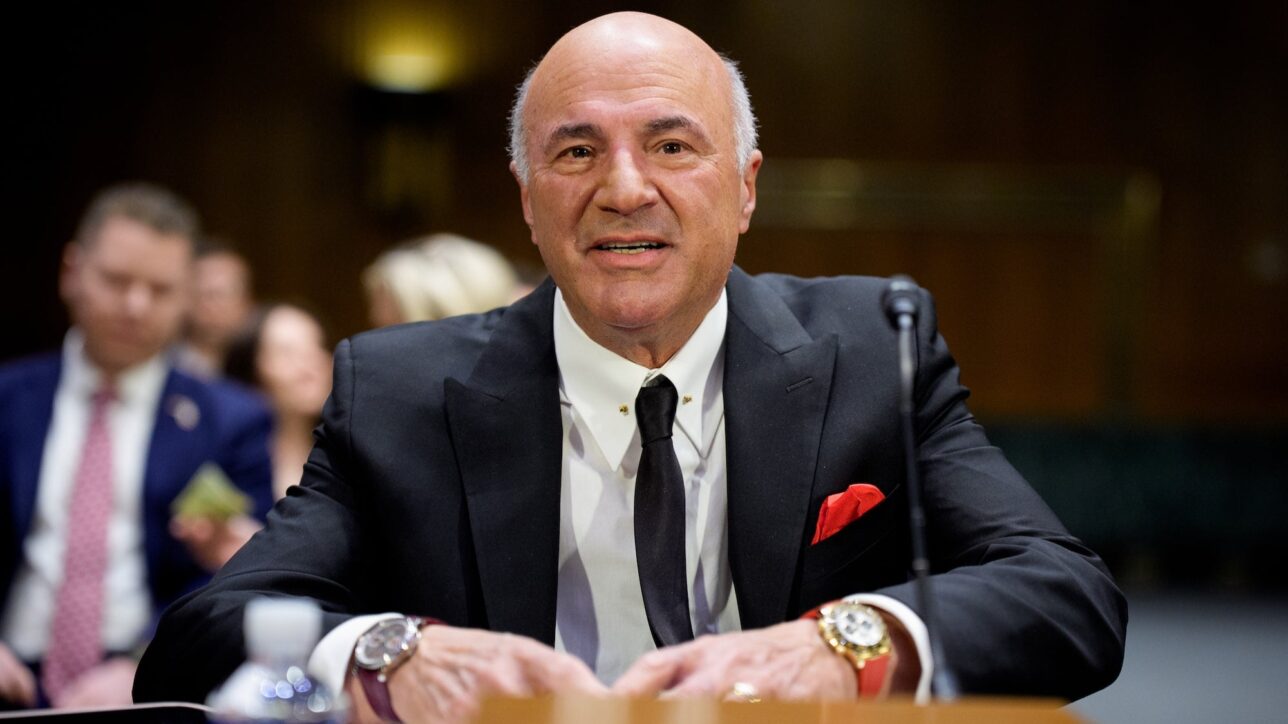
Kevin O’Leary is ready for a TikTok to deal to get done.

On Instagram, the long-time “Shark Tank” investor posted a recent television interview (conducted in his signature pajama pants) and told his followers that the TikTok “clock is ticking.”

“We’re on our second 75-day extension,” O’Leary told Fox Business. “I speculate that there will not be a third.”

Related: President Donald Trump Extends TikTok Ban Deadline Again — Here’s What to Know

The deadline for a TikTok deal was April 5, but it was extended for 75 days a second time earlier this month. President Trump wrote on Truth Social the same day that his administration is “working very hard” on a deal to “save” the app.

In the interview, O’Leary added that he doubts any S&P 500 company would want to pay the penalty of $5,000 a user if a ban goes through, and added that any speculation of a possible lease deal was “shut down three weeks ago.” Meanwhile, the 75 days will be up in mid-June.

“Anyone who wants to buy this thing now faces rewriting the algorithm,” O’Leary said, adding that it is all up to President Xi Jinping of China and that he “hasn’t decided if he’s going to sell it or not.”

O’Leary has teamed up with billionaire former Dodgers owner Frank McCourt in “The People’s Bid” for TikTok. Reddit co-founder Alexis Ohanian has also joined the team.

AI startup Perplexity also submitted a bid to merge its business with TikTok’s U.S. division for more than $50 billion.

Amazon and Applovin also recently (separately) submitted bids.

Despite the red tape, O’Leary noted that he is “100% still interested” in buying the social media platform.

“Frank McCourt and I have been working on this for so long, we aren’t giving up,” O’Leary said.

Related: Amazon Just Submitted a Bid to Buy TikTok, as AppLovin and Other Tech Companies Make Offers Before the Looming Deadline

[ad_2]

Source link