

Kullanıcı verilerini koruma altına almak için en gelişmiş şifreleme sistemlerini kullanan bahsegel giriş, gizliliğe önem veren oyuncular için güvenli bir tercihtir.

Kullanıcılarına özel ödül ve geri ödeme programlarıyla bahsegel kazanç sağlar.

Kumarhane deneyimi arayanlar için bahsegel sayfası geniş fırsatlar sunuyor.

Slotlarda kullanılan semboller genellikle tema ile bağlantılıdır; pinco giriş bu görselleri kaliteli şekilde sunar.

Her zaman şeffaf politikalarıyla bilinen bettilt güvenilir bir bahis ortamı sağlar.

How to Embrace Entrepreneurship As a Parent

[ad_1]

Opinions expressed by Entrepreneur contributors are their own.

At 28, I found myself married and expecting a baby while also founding and CEO of a quickly growing early-stage tech company. To say my situation raised a few eyebrows (and was met with a significant amount of skepticism) would be an understatement.

Day in and day out, I was being told things that simply didn’t make sense: “You’re too young to be a CEO,” “You’re too young to have a baby…” then suddenly, with the flip of a switch, one day the advice you receive changes to “you’re too old to have a family,” “you were selfish to wait.” For some reason, we have decided parenthood and entrepreneurship do not go hand in hand – not for women, anyway.

I’m certainly not the first person (and won’t be the last) to be presented with the choice between pursuing your biggest professional goals and your ultimate lifelong dream of becoming a mother. So here’s the thing: two years later, I can say this: both things are possible.

I want to take a step back and fully recognize how fortunate I was to have certain resources and support that not everyone does to help me through. Only 51% of women take five or more weeks off for maternity leave; worse, 62% of lower-income women do not take any maternity leave. A truly unacceptable outcome. We must be better.

Ahead of sitting down to write out my experience, I spoke with countless parents who covered a wide range of experiences. Ultimately, these were the takeaways: 1) there was a consensus that taking off more time would result in some penalty at work, 2) they felt like taking time off hurt their chances of a promotion and 3) some parents I spoke to couldn’t take time at all due to financial circumstances.

For people who feel they are in a similar position to me know that even though it will be difficult, you can and will get through it. And maybe, by using the platform I have been given, the conversation can get louder, and maybe it won’t be quite so difficult for those who follow. Maybe we’ll even become just a little more accommodating.

So, let’s talk about the reality of pregnancy and entrepreneurship — the parts nobody likes discussing.

I was told more times than I can count that investors wouldn’t want to back a pregnant CEO, that pregnancy was a deterrent for VC funding, that parenthood was the reason investors feared female-led companies, and that taking maternity leave would signal a lack of commitment to the company.

The advice was given: do not tell them you’re expecting, and take no meetings in person. Regardless, we forged ahead amidst the chaos of impending parenthood and business growth. We began discussions with potential investors when I was about seven months pregnant, and we officially closed our Series A just days after I gave birth. Yes, you read that right — texting investors while in labor is not for the faint of heart.

Related: Why Women’s Entrepreneurship is Booming Right Now

The days and weeks following, the struggles of diaper changes, navigating breastfeeding, and, as if that wasn’t enough, a broken tailbone from childbirth, all while running a company—these are the untold stories that leave women feeling isolated and unsupported. It’s time to dismantle the stigma and normalize conversations around the challenges of pregnancy and motherhood in the workplace.

As for my path, I didn’t take maternity leave until my baby girl was about 12 months old — I am beyond grateful for the opportunity to do so. But by then, I was exhausted and didn’t feel like I was doing either role particularly well. Ultimately, my three-month maternity leave was the best decision for me, my family and my business.

Not everyone is in the same position as me or will be as fortunate as me to take the delayed leave I did, but for those who may be struggling with work-life balance or the challenges of being a new parent, here’s what I’ve learned.

To those who think they don’t need the time off, or that their careers can’t afford the pause, let me be clear: that perspective needs a shift. You are not just entitled to this time; you need it. And it’s not merely about physical recovery — it’s about mental and emotional health, bonding with your child and adjusting to the monumental task of parenting. This isn’t just for birth mothers. Mothers, fathers, adoptive parents, all of us need this time. Why?

  1. Your child is paramount. Forget work for a moment. Bonding with your child is a once-in-a-lifetime experience that nothing, absolutely nothing, should overshadow.
  2. Parenting is the world’s toughest job. No corporate challenge compares to the early days of parenthood. Taking time helps you adjust to this new life phase, something I wish I had more of before diving back into work.

Related: How to Balance Entrepreneurship and Parenthood Without Losing Your Cool

And a few tips I have for those navigating this journey:

  • It’s OK to put yourself first. One of the best pieces of advice I can give: it’s ok to be ‘selfish’. This is the one time you can say no, ask for help and set boundaries — for all intents and purposes, the world should feel like it’s revolving around you.
  • Don’t be afraid to communicate openly with your team and clients. It’s easy to be scared and to be honest about what you’re going through. My advice: Be open and honest, and more often than not, you’ll be surprised by the support you get.
  • Plan and delegate. Before your leave, set clear expectations and delegate responsibilities. Empower your team so the business can run smoothly in your absence, minimizing stress for everyone involved.

It’s time to break the silence surrounding parenthood and entrepreneurship. Let’s embrace the complexities of our lives, challenge societal norms and pave the way for a more inclusive and supportive future.

[ad_2]

Source link

A Leadership Shortage Is Coming. Here’s What Needs to Happen to Prevent It.

[ad_1]

Opinions expressed by Entrepreneur contributors are their own.

My parents were born in 1947. For 35 years, they drove to the same exact buildings and worked the same exact jobs. My mother was a high-school math teacher and my father was an investment advisor. They didn’t demand much, and their story isn’t uncommon. They were part of an entire generation that valued job stability and loyalty — but those values are a thing of the past. Today’s workforce is largely comprised of millennials (ages 28 to 43). As the last of the boomers retire and Generation X ages, it’s imperative that we prepare millennials to take over the leadership responsibilities of organizations.

This requires us to think differently. Millennials want vastly different things than their predecessors did, and what’s more, they’re glad to change jobs to find them. A recent Gallup study reported the following statistics: Millennials are the generation most likely to switch jobs; 60% of millennials are currently open to new job opportunities; and millennials are the least engaged generation in the workplace. The U.S. Bureau of Labor Statistics indicates that the average millennial held 8.6 jobs between the ages of 18 and 34. What’s more, research demonstrates that younger generations are no longer interested in taking leadership roles. In the next decade or two, there could be a shortage of emerging leaders wanting to take on leadership responsibilities for what’s viewed as minimal payoff.

If successful organizations want to stay successful, they must work to understand what millennials really want and create attractive leadership opportunities that align with those things — otherwise, a leadership shortage could happen in the coming years. Here are a few ways they can do it.

The rest of this article is locked.

Join Entrepreneur+ today for access.

[ad_2]

Source link

Mother-Daughter Side Hustles Lead to 8-Figure Snack Business

[ad_1]

This Side Hustle Spotlight Q&A features mother and daughter Elisabeth and Gina Galvin, the duo behind artisanal snacking company Stellar Snacks. Elisabeth Galvin is also the founder of snack brand Delyse, which began as a side hustle in an old CVS before growing into a leading supplier of gourmet snack products. Today, Delyse services national airlines, including American Airlines and JetBlue, and Stellar Snacks is in various grocers across the country and online retailers and provides in-flight snacks for Alaska Airlines.

Image Credit: Courtesy of Stellar Snacks. Gina Galvin, left; Elisabeth Galvin, right.

What did your professional day-to-day look like when you founded Delyse as a side hustle?
In the 90s, I moved to the U.S. from the South of France, chasing a dream of becoming an entrepreneur in America. I spoke virtually no English at the time, so I enrolled as a full-time student at the University of Nevada, Reno, to learn. I was taking 20 credits and had a jam-packed schedule with courses ranging from English as a second language to communications and advanced mathematics. My days were filled with classes and studies. By night, I found solace in the kitchen, where I cooked with the nostalgic flavors of home — which always brought me immeasurable happiness.

When did you start Delyse, and where did you find the inspiration for it?
One of my favorite snacks to make from scratch was French pralines, using my family’s recipe. These are roasted and candy-coated peanuts that we commonly enjoy by the beach in the South of France (called chaud chaud pralines). They were my favorite, and I couldn’t find anything like them here in the U.S. I perfected the recipe at home and loved to share this delicacy with my American friends — who were wowed by the flavor. One day, I was invited to a Fourth of July party and wanted to bring something unique — so, of course, I brought those nuts. That was the day that a spark ignited. My snacks were a huge hit at the party and caught the attention of two attendees in particular who happened to be the CEO of Reno Air and his wife, a famous food stylist. They asked me if I could make my pralines for Reno Air and become their signature snack! They asked me, “Can you do it?” My response was, “How long do I have?” to which he answered, “Can you do it in three months?” At that moment, I set my mind to it and told him, “Absolutely. I’ll make it happen.”

What were some of the first steps you took to get your side hustle off the ground?
I knew that to succeed with this opportunity, I had to scale. I ordered three authentic copper kettles from Italy to perfect my craft. They were too large for my kitchen, so I started to roast in my garage while I looked for a bigger place. I secured permits, obtained a business license and established my company “Delyse Inc” (a play on the word delicious in French). I was still a full-time student at UNR, so I started by selling the pralines on campus and at games. My English was still in its early stages, so I lovingly named the line of snacks “Thoz Nuts” (just the way I pronounced it with my accent) and created the brand and packaging. Thoz Nuts gained traction, becoming a favorite at local gourmet and specialty stores and selling out at my booth at sporting events. I established that there was a demand, and now it was time to grow my production capacity. I found a location that was previously a CVS store, and I made a deal with the landlord (who became a beloved mentor). He said, “Rent is $700 per month; you can start paying me when you make money.” I vividly remember proudly paying on my very first month. It was the first check I wrote from my Delyse checkbook!

What were some of the biggest challenges you faced while building your side hustle, and how did you navigate them?
Besides the challenge of balancing my course load with my startup, my main business-related challenges were establishing credit with vendors and suppliers and getting equipment financing. I opened a bank account with a credit card that had a $500 credit limit. This allowed me to get started pre-paying my vendors. Once I earned their trust and proved that I was performing, I was able to establish net 30 credit terms, which is ultimately what you need to scale a business. Starting from scratch, it can often take three years to establish credit, and I was very lucky to do so in three months. Another challenge was finding employees. In my communications class, I had a lot of classmates from the baseball team, and I convinced them to come to work with me because it was a good workout — roasting is a lot of work and a very hot environment. Then I hired my first full-time employee, who still works with me 30 years later.

How long did it take you to see consistent monthly revenue? How much did the side hustle earn?
It took two months to start earning revenue once I got all the equipment installed and running. I was selling Thoz Nuts for $1 a bag and selling 1,000 bags per game. Every single football game sold out. In the third month, Reno Air came through on its promise and brought Thoz Nuts on board. I started by making 20,000 bags per week at $0.50 per unit. In the first year of business in 1992, Delyse made about $800,000. Reno Air was in full expansion, adding new destinations, and I was growing with it, especially during the early popularization of Silicon Valley and new flight routes to the Bay Area. In 1995, I had a new idea to sell advertising space directly on my bags in order to offer them as a free snack to airlines and win new business. This made waves in the travel industry and brought in airline clients like United, American Airlines, American Eagle, Northwest Airlines, Skywest and many on-premise venues at the airports. I worked with famous brands that loved the concept of reaching a high-end traveler demographic and creating a captive audience for the ads. Some of these notable brands were American Express, Motorola, Ty Warner, AOL, CompuServe, Prodigy, General Motors, Newsweek, Book of the Month and AT&T. This evolution brought Delyse to the next level, earning about $3 million per year. That proved our ability to perform on time and at a large scale and truly put my company on the map.

What does growth and revenue look like now?
While we stopped [offering] Thoz Nuts on airlines due to the rise of severe peanut allergies, Delyse continued to grow and serve commercial aviation partners with other snack packs, trail mixes and, most notably, pretzels. Then in 2018, my main vendor shut down its plant in California, leaving a complete void for pretzel manufacturers on the West Coast. It was a crisis for Delyse and many other companies. I decided I was going to take my destiny into my own hands and open a pretzel bakery. Like that, Stellar Snacks was born — a second company I co-founded with my daughter Gina, who was in college at the time. She was pursuing a double major in marketing and women’s studies while also helping me with brand design as her side hustle after classes and her internship. Within five months, our bakery was operational, and Delyse started offering our bespoke Stellar Snacks pretzels to United Airlines, then Alaska Airlines, American Airlines and JetBlue. Our in-store distribution of Stellar Snacks also grew from local stores to the West Coast, then national accounts.

Image Credit: Courtesy of Stellar Snacks

What does growth and revenue look like now?
Delyse Inc. and Stellar Snacks both continue to thrive. Our pretzels are served to hundreds of millions of passengers per year, carried in thousands of grocery retailers coast to coast and loved by a loyal fanbase. Our revenue has surpassed the eight-figure mark, a testament to our commitment to quality and innovation.

What do you enjoy most about working as a mother-daughter team?
Gina and I share an unparalleled bond of trust and unwavering support, fostering a collaborative environment where ideas flourish, and challenges are conquered together.

What’s your advice for others hoping to start successful side hustles or full-time businesses of their own?
Create a strong business plan, and make sure you secure your first customer before taking the plunge to cover your overhead. Entrepreneurs are risk-takers, and it’s okay if you don’t have it all figured out because clarity comes as you go. Learn from people you trust, surround yourself with dedicated team members who understand “startup mode,” study your industry, acquire valuable data and nurture genuine partnerships with your vendors, banks and customers by being honest, transparent and sharing your vision to sow the seeds of success. It truly takes a village, and the people who know your story will want to support and see your growth. While the journey will have its challenges, the fulfillment derived from pursuing your passion is immeasurable. Believe in yourself and your mission.

[ad_2]

Source link

How a Big Bet Paid Off for Gambling.com’s Founder

[ad_1]

Opinions expressed by Entrepreneur contributors are their own.

Gambling.com Group founder and CEO Charles Gillespie started his entrepreneurial journey in the most fitting way possible. With a big bet. Eighteen years later, Gillespie describes his decision as “almost beautifully stupid,” but it’s hard to deny that his gamble paid off.

Gambling.com Group is the world’s leading online gambling affiliate network, with a portfolio of over 50 media sites offering gambling-related content and instant connection to online casinos. Gillespie likens his business model to hotels.com in that both services connect customers to the best local options to fit their needs, whether that means a bed or a baccarat table. “We get paid by the online gambling companies for referring new customers to them,” Gillespie explains.

At its core, Gambling.com Group is a performance marketing company. It aims to drive what Gillespie calls “high-value traffic” to its clients. In the online gambling industry, high-value traffic means more than just bringing in high rollers; it also depends on customers looking to wager immediately.

Related: ‘Every Billionaire Wants a Casino.’ Jay-Z Is Trying to Open a Caesars Palace in the Heart of Times Square.

“It’s all about high intent,” Gillespie says. “People searching things like best sports book promos, best online sportsbooks, things that really show intent for that user to understand not only what options are out there, but which one is best for their circumstances.”

Before becoming a major proprietor in online gambling, Gillespie was a major player. Growing up in North Carolina, the self-described “geek” spent his youth building websites and eventually stumbled across some people with a penchant for online poker. Over time, Gillespie and his friends got pretty good at the game; at one point, poker became his primary source of income for a few years.

After starting his first online gambling affiliate site in 2003, Gillespie decided to push all his chips into the industry. He began working on his company in 2006, out of his Ruffin Hall dorm room at UNC a la Mark Zuckerberg, writing lines of code between classes. Unfortunately for him, the US government was less keen on the concept of legalized online gambling. Congress passed the Unlawful Internet Gambling Enforcement Act in late 2006, which Gillespie blames for killing early chances of a homegrown online gambling industry in the States.

Related: ‘It Never Crossed My Mind That I Would Fail’: Chris Bevilacqua on the Launch of Simplebet

Despite the bad beat, Gillespie didn’t fold. Instead, he went all in on achieving his dream. “We didn’t have a lot of money, and we couldn’t do it in the U.S.,” Gillespie said. “So we decided to go to the next biggest market in the world full of people that love to gamble.” The 22-year-old post-grad made his biggest bet on himself yet, booking a one-way flight to China with nothing but some lines of computer code and a dream. Upon arrival, Gillespie hired 25 people to help him and his co-founder build what became a million-page sports betting content website.

“Starting our career in China taught us to learn fast,” Gillespie says. “We cut our teeth in one of the most competitive business environments imaginable.” He recalls meeting with a prominent investor early in his time in China, where the investor told him, ‘These people make American capitalists look amateurs. They are infinitely more capitalist and aggressive than any competition in the States.” According to Gillespie, he was right. The cutthroat business environment taught the young CEO to narrow his focus. “If you chase too many rabbits at once, you won’t catch any of them,” he said.

Related: The History of Online Gambling (Infographic)

After getting the company off the ground, Gillespie set his sights on the UK, the world’s largest properly regulated online gambling market. He pivoted away from sports betting and toward online casino games. “We went all in on the UK market, and that’s when our fortunes started to change. We got some traction, started making meaningful money, and also got the opportunity to buy the gambling.com domain name in 2011,” Gillespie said.

By then, Gillespie had given up on the US figuring out how to regulate online gambling. He had moved on to greener, less gridlocked pastures. So, when the Supreme Court ruled in favor of online gambling in 2018, Gillespie was caught off guard. “We were focused on the UK, Ireland, European markets,” Gillespie said. “So we had to turn the whole thing around.” And turn around they did. Pivoting from seriously considering a European IPO, Gillespie committed to returning his company to the States, even if he had to wait a few years. Today, the US makes up most of its $108 million total revenue, accounting for $60 million. According to Gillespie, Gambling.com Group is the only publicly traded online gambling affiliate company in the US that was built rather than bought. In hindsight, Gillespie views some of his early risks as naive and reckless. However, these risks taught him a valuable lesson that resonates with every entrepreneur: the best bet you can make is one on yourself.

[ad_2]

Source link

Get 500GB of Lifetime Cloud Storage for a One-Time $120 Payment

[ad_1]

Disclosure: Our goal is to feature products and services that we think you’ll find interesting and useful. If you purchase them, Entrepreneur may get a small share of the revenue from the sale from our commerce partners.

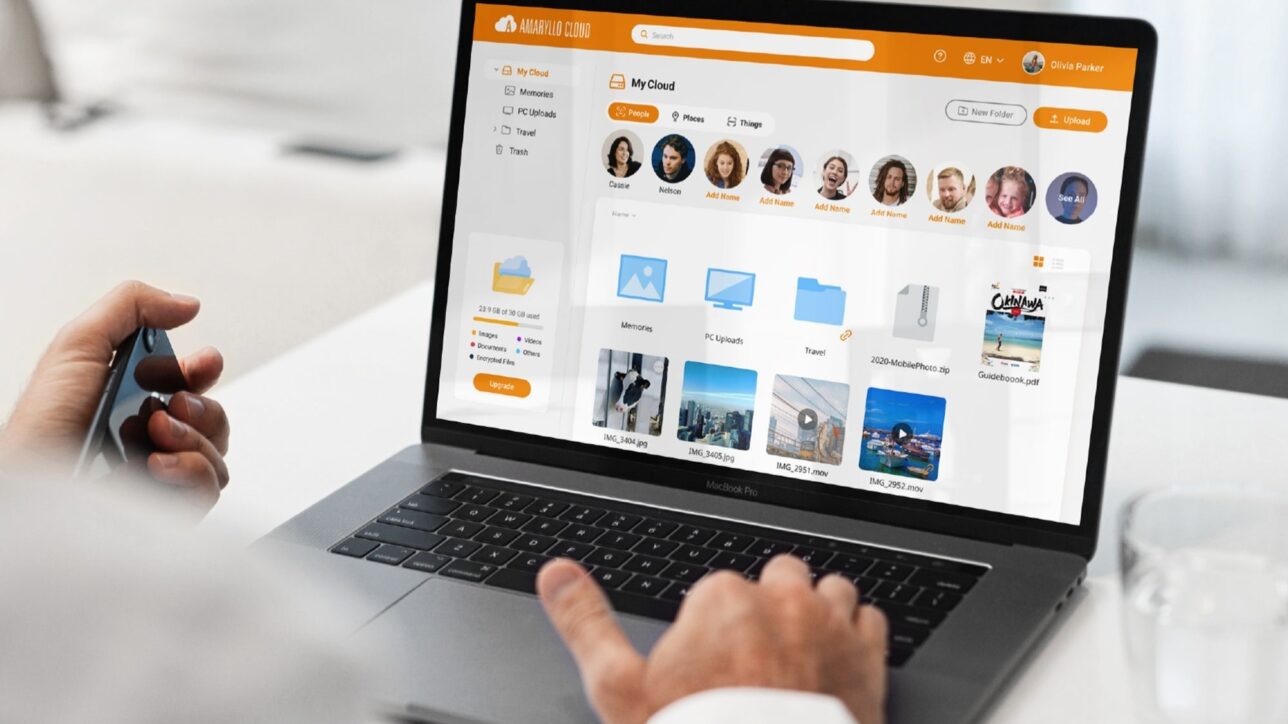
Business owners think the top three skills for success are communication, problem-solving, and time management. Now, you can solve the problem of finding efficient, affordable, and secure cloud storage for your company’s data with 500GB of Amaryllo Cloud Storage for a one-time payment of $119.99.

Featured at CES, your data and privacy are protected by such powerful security that even the service says it has no idea what you’re storing on its servers, thanks to Amaryllo’s zero-knowledge policy. However, you can access your data and back it up from any one of multiple devices using Android, macOS, or iOS in addition to your PC. In fact, you can even upload files in bulk.

Amaryllo doesn’t just store your files, either. The platform provides smart AI features that can organize your images into smart albums based on the places and things in them. Then, the smart search will help you easily find what you’re looking for.

You can also authorize up to nine other people to join you, and each will have a private lifetime space. Collaboration with your team will be seamless, and you can share files quickly without needing to register or pay additional fees.

Best of all, your storage can scale up as you need it to, simply buy another lifetime plan for as much as you need. There are additional plans available from 100GB to 300GB.

It’s no wonder users are thrilled with the service, with one saying: “Amaryllo Cloud has been a lifesaver for me. I recently had to switch computers and was worried about losing all my important files, but with Amaryllo, I could rest assured that my data was safe and secure. It’s easy to use and set up, so I highly recommend it if you’re looking for a secure backup solution.”

Get 500GB of Amaryllo Cloud Storage for a one-time payment of $119.99 (reg. $249).

StackSocial prices subject to change.

[ad_2]

Source link

Keep the Office Cool This Summer with $10 Off a Klima Thermostat

[ad_1]

Disclosure: Our goal is to feature products and services that we think you’ll find interesting and useful. If you purchase them, Entrepreneur may get a small share of the revenue from the sale from our commerce partners.

It’s difficult to do your best work when you’re uncomfortable. So, if you’re working from a home office or going into an office with poor climate control this summer, you may find it a struggle to get anything done until the room temperature evens out. But you can take greater control of the temperature with a Klima Smart Thermostat, now $10 off for a limited time.

This smart thermostat and controller is compatible with more than 10,000 models of mini split and window A/Cs, or air-to-air heat pumps. It’s easy to install in just a few minutes on your own and gives you complete control of the A/C or heat from your phone. Klima takes over the control of your unit’s remote so you can control it through your smartphone. It must be installed in the same room as the unit, and you will need one Klima per unit.

With remote access, you can set schedules for cooling or warming to automate the temperature so it’s always comfortable when you arrive. That will also help save on energy bills since you can turn the system off when you’re not there.

Klima is full of convenient features, like voice control for hands-free thermostat adjustments and appliance health monitoring to alert you if your A/C or heat pump needs maintenance soon. It has open window detection that turns off the A/C automatically and offers smart zoning so you can adjust temperatures on a room-by-room basis to avoid wasting energy. With the guardian mode, you can also set minimum and maximum temperature levels.

Stay comfy this summer while saving energy and money.

Right now, you can get a Klima Smart Thermostat for $10 off the regular price of $145—just $134.99 for a limited time.

StackSocial prices subject to change.

[ad_2]

Source link

How to Make Hard Decisions Or Run The Risk of a Hard Life

[ad_1]

Entrepreneurship is an endless series of hard decisions. I’m sure you’re facing one right now. Sadly, I can’t give you the right answer — but I can offer you something new to consider.

To really appreciate this, I first want to tell you about someone who faced a gut-wrenching choice of his own.

I’ll call him Steve. He’d stolen things, served time in prison, and wanted to turn his life around. Finding a job was hard, but he eventually landed some freelance work for a big company. He threw himself into it, outworking everyone and getting noticed.

The rest of this article is locked.

Join Entrepreneur+ today for access.

[ad_2]

Source link

These 6 Major U.S. Cities Still Have Affordable Homes

[ad_1]

Only six major U.S. cities have median home prices that a household making the local median income could afford.

An April report from Clever Real Estate compared the income needed to afford a home in major U.S. cities to the actual income earned by the typical household.

The report considered a home affordable to a particular buyer if it fulfilled the popular 28/36 rule, which advises buyers to spend a maximum of 28% of their monthly income on housing, plus an extra 8% paying other debt like credit card or auto bills.

Even with a 20% down payment, the standard homebuyer making median local pay would not be able to afford a home listed at a middle-of-the-market price in 44 out of 50 major cities.

Home mortgage rates are also high right now, which could prevent sellers from listing homes and buyers from purchasing them.

Related: The ‘Silver Tsunami’ Meets ‘Golden Handcuffs’ as Past Low Mortgage Rates Lock in Homeowners — Whether They Like It or Not

Here are the six cities with homes that median earners can afford.

1. Pittsburgh, Pennsylvania

Pittsburg, Pennsylvania. Credit: Getty Images

Actual Income: $70,607

Income Needed To Afford The Median Home: $59,919

Local Median Home Sale Price: $199,573

2. Cleveland, Ohio

Actual Income: $65,198

Income Needed To Afford The Median Home: $56,378

Local Median Home Sale Price: $182,652

3. St. Louis, Missouri

St. Louis, Missouri. Credit: Getty Images

Actual Income: $74,531

Income Needed To Afford The Median Home: $66,743

Local Median Home Sale Price: $225,674

4. Memphis, Tennessee

Actual Income: $64,008

Income Needed To Afford The Median Home: $61,659

Local Median Home Sale Price: $213,929

5. Indianapolis, Indiana

Actual Income: $75,824

Income Needed To Afford The Median Home: $73,398

Local Median Home Sale Price: $257,584

6. Birmingham, Alabama

Birmingham, Alabama. Credit: Getty Images


Actual Income: $67,242

Income Needed To Afford The Median Home: $65,216

Local Median Home Sale Price: $235,212

[ad_2]

Source link

McDonald’s CFO: Bigger Burgers, More Meat Testing This Year

[ad_1]

After months of testing and teasing dozens of modifications to its original burger, McDonald’s is now revealing one massive change that customers will notice — the size.

In a Tuesday call with analysts, McDonald’s Chief Financial Officer Ian Borden announced that the chain will be testing a larger burger this year in select markets.

“As we look to further build on our leadership in beef, our team of chefs from around the world have created a larger satiating burger,” Borden said during the call. “We’ll be testing this burger in a few markets later this year ensuring that it has universal appeal before scaling it across the globe.”

Related: McDonald’s Is Completely Changing Its Burgers in 2024

This isn’t surprising news for McDonald’s, as Borden hinted at the UBS Global Consumer and Retail Conference last month that he believed there was a “significant” opportunity to create a larger-sized offering and noted the chain has attempted to do so in the past.

In the mid-90s, McDonald’s attempted to create “premium” burgers with different toppings and offerings (such as the Arch Deluxe, for example), instead of simply making a larger patty.

“We tried to get after this opportunity for a number of years because we thought the opportunity was about premium burger,” Borden said last month. “We weren’t successful.”

It’s been a long time coming for the chain, which laid out a massive growth plan in December that included creating a new version of its burgers with an estimated 50 modifications. The changes were first tested in Australia and select West Coast and Midwest markets in 2023.

Other changes included swapping the Big Mac’s sesame seed bun with “buttery brioche” and each burger coming with more of the cult-favorite “special sauce.”

McDonald’s reported positive Q1 2024 earnings on Tuesday, a 2% quarterly jump in global comparable sales growth, which marks the chain’s 13th consecutive quarter of comparable sales growth.

Related: McDonald’s in Connecticut Goes Viral For Astronomical Prices

“As consumers are more discriminating with every dollar that they spend, we will continue to earn their visits by delivering leading, reliable, everyday value and outstanding execution in our restaurants,” said CEO Chris Kempczinski.

McDonald’s was down just over 8% as of Tuesday afternoon.

[ad_2]

Source link

6 Guiding Principles Behind Every Successful Company

[ad_1]

Opinions expressed by Entrepreneur contributors are their own.

A search for “formula for company success” on Amazon yields almost a thousand results, primarily consisting of self-help books. While I don’t claim that I have discovered the elusive formula, I believe certain characteristics can aid in achieving success, which I identified after analyzing the top companies currently active in the market.

I’m the founder of a deep tech company that is trying to push the limits of what is possible in the field of computers. For me, following these principles is crucial to achieving this ambitious goal. Yet, I’m sure these principles are not exclusive to any one field or industry and can be applied to any business willing to prioritize and use them as tools for development.

Related: 5 Key Leadership Principles for Driving Growth

Elegance

Elegance goes beyond mere aesthetics; it is the embodiment of beauty in every facet of a company. What does beauty consist of? Honestly, everything. If the founder wants to ensure the elegance of their product, they should pay attention to the structure that should be observed in every process of interaction with their company. Those may range from the way your employees present themselves at networking events or in-store to the speed with which your support team assists customers. Not only will this provide your brand with consistency, but it will also become more appealing because, after all, humans are aesthetic creatures.

When you think of elegant products or packaging, I’m sure one of the brand names that comes to mind is Apple. From the logo to the in-store decor, elegance is evident in every aspect of the brand’s efforts. In your business, the aspects of elegance are definitely different from theirs, but their role is the same.

Focus on goals and values

Focusing on the result is especially important for tech companies, particularly those developing new tech, as it allows them to deliver on their promises to both themselves and their customers. Most importantly, it allows them to focus on only those aspects that are truly important and relevant to their ultimate goal. To achieve this, detailed planning is required, where the most optimal path is selected from thousands of possible options. Moreover, prior to any action taken, it should involve thousands of hours of research, hypothesis testing, and more, but it all must contribute to the company’s goals.

According to Gartner’s 2019 Product Manager Survey, only 55% of new products are launched on time, and the other 45% are delayed by at least a month. This underscores the importance of the founders not only setting realistic goals but also communicating them clearly both to your customers and employees. Additionally, the company should not stray from its original purpose and should always keep its eye on the end goal. In order to stay on track, some things should be prioritized, such as good time management, both in your life and in your business, or for example, preparing contingency plans in advance. You can use these tools to ensure proactive and adaptive responses to unforeseen obstacles to ensure a smooth, or at least stable, ride to success.

Initiating and igniting

While it is important to keep up with the market and its latest developments, it is crucial to use this information to create new trends instead of simply following the existing ones. To follow this approach, business owners should create and keep in mind a clear picture of how their businesses differentiate themselves from their competitors, allowing them to have a shot at becoming industry leaders. The problem with utilizing trends as a foundation for a company is that the trend cycle inevitably leads to obsolescence.

Netflix is a prime example of this. It originated as a DVD-by-mail service in 1998, just one year after DVD players were introduced in the U.S. before they became an essential part of every household. The company not only competed against Blockbuster, the largest rental chain at the time, but also revolutionized the rental process by introducing a new way for consumers to interact with their services, introducing a subscription model in 1999. Netflix entered the year 2000 with only 300,000 subscribers, now this number is up to 247.2 million. Why? Because they were able to come up with an idea for a truly unique service.

Pursuit of excellence

One of the greatest enemies of any entrepreneur’s long-term success is these three words: “That will do.” This phrase not only affects you as an entrepreneur, undermining your abilities and limiting your potential success, but it also affects every single facet of your business. The pursuit of excellence doesn’t entail that you shouldn’t attempt to release anything until everything is perfect, but it does suggest that whatever you can do should be done to the best quality possible.

The strive for perfection, or rather the lack of it, is the reason the above-mentioned DVD rental chain now has only one store left in the U.S. When the market began expanding and Netflix entered the game, Blockbuster had the opportunity to acquire it, but passed on it arguing that Netflix was a too-niche business. Blockbuster’s opposition to online streaming and the fact that it was stagnant and content with the unchanged while an entirely new industry was evolving prevented it from innovating.

Related: 5 Key Leadership Principles for Driving Growth

Embracing challenges

Given that technology has advanced more in the past two centuries than at any other time in human history, the possibilities for further development and creation are endless. It is not uncommon to encounter a myriad of problems when creating something new, especially in the beginning. However, a business owner shouldn’t avoid working on a unique product or service simply because of the issues it may present and to search for innovative solutions.

As obvious as it may seem, the easiest way to approach a challenge is through hypothesis testing. Whenever you are faced with seemingly impossible problems, it is of utmost importance not to be intimidated by them, as this can lead to stagnation or the inability to deliver the promised product or service. By using hypothesis testing, one can generate and test dozens of possible solutions to avoid stagnation and initiate progress. Not only does this expand the range of feasible solutions, but it also allows the company to create a truly great product or service because you will be able to accomplish something no one has ever done.

Positive impact

In the 21st century, it is essential to prioritize more than just profit, especially at a time when we are experiencing such a rapid escalation of climate change and other worrying events. We are at the pinnacle of technological development, and it would be irresponsible not to use it to improve the world around us or at least try to preserve it for future generations.

As a founder of a tech company, I often pay attention to this detail and believe that a positive impact is essential when it comes to running such a company and that those who have a genuine urge to make the world a better and safer place have a real chance of creating a thriving business. Of course, this principle is not exclusive to one industry only; for example, food delivery and ride-hailing services have a better chance of succeeding if they are inclusive and convenient to all. Remember, if you have an opportunity to impact the world with your business, there are hundreds if not thousands of options available, especially today.

[ad_2]

Source link