Kullanıcı verilerini koruma altına almak için en gelişmiş şifreleme sistemlerini kullanan bahsegel giriş, gizliliğe önem veren oyuncular için güvenli bir tercihtir.

Kullanıcılarına özel ödül ve geri ödeme programlarıyla bahsegel kazanç sağlar.

Kumarhane deneyimi arayanlar için bahsegel sayfası geniş fırsatlar sunuyor.

Slotlarda kullanılan semboller genellikle tema ile bağlantılıdır; pinco giriş bu görselleri kaliteli şekilde sunar.

Her zaman şeffaf politikalarıyla bilinen bettilt güvenilir bir bahis ortamı sağlar.

Launching a New Tech Product? Take These Steps to Ensure It Succeeds.

[ad_1]

Opinions expressed by Entrepreneur contributors are their own.

Every year, thousands of new tech products are vying for consumers’ and businesses’ attention. Only 5% of them manage to launch successfully and attract loyal, long-term clients with a chance of becoming household brand names.

Having an effective launch strategy, including a minimum viable product, can make the difference between a product not finding its market and a showstopping launch.

Understanding the importance of an MVP

A minimum viable product (MVP) is a simple version of a new product that allows a team of creators to assess its viability with potential customers. MVPs can validate product ideas with minimal risks and resources. They can generally be launched faster than full products and may save the development team valuable time and money.

Think of Amazon, for example. Founder Jeff Bezos started by selling books from a garage before growing the company to sell most types of products consumers want and launch a leading eBook reader.

MVPs cut down on the time it takes to bring a product to market and allow developers to integrate early user feedback and test their assumptions about the target audience. As a result, the full-scale product is far more refined when it is launched. The messaging app Slack used this approach to test viability before releasing the full version.

The key to launching a successful MVP is to identify one specific audience pain point that the product can solve and focus on offering the best possible solution to address that issue. Later, the full product can have a wider focus and address additional pain points.

Related: 5 Ways to Make Your Next Product Launch a Success

Developing a go-to-market strategy

Once your team has analyzed the performance of the MVP, you need to develop a go-to-market strategy for the full version of your product.

The three critical components of that strategy are identifying your target market, crafting a unique value proposition (UVP) and developing a launch timeline. Market research can help you narrow down the most promising audience segments and define your ideal customer profile. If your team is developing a SaaS product, for example, small and medium-sized businesses looking for affordable, scalable solutions might be a good fit.

Your unique value proposition needs to be clear and compelling and differentiate your product from competitors. The strongest UVPs focus on addressing specific customer pain points.

Your launch timeline needs to include development, product testing, marketing and sales efforts. Be realistic when setting deadlines, and ensure that every department is aligned and ready for the launch. It’s generally better to plan more time from the start than to delay the launch later.

Building pre-launch buzz

Remember Game of Thrones? Weeks, if not months before every new season launched, the production company began to build buzz around that season. By the time the first episode was ready to stream, millions of viewers were ready.

When you’re building a pre-launch buzz for your product, you’re replicating this approach. Content marketing is highly effective at educating and exciting your target audience. Consider blog posts, case studies from your MVP, videos and other types of content that talk about the challenges your product will address.

Reach out to early adopters, influencers and industry experts to help spread the word about your product. Offer exclusive previews, beta version access or discounts to incentivize early engagement and feedback.

Your social media channels are ideal for creating buzz by sharing teasers and countdowns to launch. As you’re building pre-launch buzz, you should also start building an email list to keep potential customers informed.

Related: How to Nail a Successful Product Launch

Launching the product

As you’re getting closer to your launch date, make sure all relevant teams and contributors are ready for a smooth and coordinated launch. If you’re launching a physical product, availability is critical. Marketing and sales efforts also need to be synchronized to allow them to amplify each other.

Set up systems to capture and analyze customer feedback during and after the launch, and prepare to make fast adjustments to rectify issues or address customer concerns.

Notify and engage with industry publications and journalists to secure public relations and media coverage. A compelling press release with testimonials from beta users can effectively start this process.

Post-launch strategies

Define the key performance indicators (KPIs) such as sales, user acquisition, engagement and customer satisfaction ahead of your launch date, so you can measure and analyze them. Most digital marketing channels give you access to these metrics through a dashboard.

Understanding your product’s performance through KPIs and user feedback helps you refine and enhance your product. Don’t hesitate to release updates that introduce new features and address user needs.

Think about how your product can reach a broader audience. Entering into strategic partnerships, utilizing additional marketing channels and expanding your sales efforts can all open up new markets for your product.

Long-term product management

With the initial launch completed, you need to start thinking about maintaining and strengthening customer relationships. Excellent customer service and ongoing engagement are cornerstones of successful relationship building. Use CRM tools to support customer interactions, and remember to personalize communications. You could also consider creating a loyalty program that offers exclusive perks.

Leading tech entrepreneurs continue to innovate and improve their products consistently. In 2023 alone, Google launched or updated 23 products, demonstrating its culture of continuous improvement.

Enabling structured feedback through quarterly customer feedback sessions or surveys ensures that user feedback is always taken into account and integrated into product development.

Related: 4 Launch Strategies for Startup Success and Longevity

Follow these strategies to launch your tech product successfully from MVP to market with confidence. The most successful product launches are planned beyond the initial release. Create a sustainable product lifecycle that continues to deliver value to your customers. Remain open to adaptations and iterations, listen to your audience, and keep innovating to ensure your product remains relevant and competitive in the tech industry.

[ad_2]

Source link

Double Your Traffic and Boost Your Sales With This Ecommerce SEO Guide

[ad_1]

Opinions expressed by Entrepreneur contributors are their own.

Many ecommerce brands spend huge budgets on paid advertising to generate leads. They invest time and money into pay-per-click campaigns, but once the ad spend stops, so does the traffic.

What they’re missing is a sustainable strategy that continues to drive traffic and sales without ongoing ad costs.

That’s where SEO comes in. When you optimize your website for search engines, you can attract a steady stream of potential customers who actively search for what you offer.

In this article, I’ll show you the best SEO tips to double your ecommerce organic traffic and increase revenue without relying on expensive ads.

Related: 5 Simple SEO Strategies to Improve Your Rankings

Why is SEO important for ecommerce businesses?

There are more than 26.5 million ecommerce websites worldwide, which makes it incredibly hard to get yours noticed. With the right SEO strategy, however, you can boost your online presence, attract targeted traffic and drive more sales.

When you rank well for certain keywords in search results, it makes it easier for potential customers to find you when they look up relevant products. These people are actively searching for your products, which means they are more likely to become your customers.

High rankings also boost your brand’s credibility and authority because consumers perceive top-ranking websites as more trustworthy.

So, let’s see how you can use SEO to get these benefits for your small business.

5 steps for doubling your ecommerce organic traffic

Doubling your organic traffic may seem daunting, but with a clear SEO strategy and consistent effort, you can achieve it quicker than you think. The trick is to master the basics, which are often overlooked while chasing for some secret formula that gives instant results.

That’s why you should:

1. Do more extensive keyword research

Keyword research is crucial for ecommerce businesses, as it helps identify keywords potential customers use when searching for products. To do it right though, you need to go deeper than traditional metrics like search volume and difficulty.

Instead, focus on understanding the search intent behind each keyword. Some people are looking to learn more about a topic, while others may be more interested in buying a product.

You should focus on keywords with clear purchasing intent, which are more likely to drive sales. For example, if you have a beauty products store, you may initially target a high-volume keyword like “best skincare routine.” However, people searching for this term are typically seeking information, not necessarily looking to buy.

Targeting keywords like “best price for anti-aging cream” can increase sales, as people searching for these terms are ready to make a purchase.

Related: Trying to Rank for a Keyword on Google? Don’t Fall for These 3 Myths.

2. Optimize product pages

Well-optimized product pages can significantly increase conversion rates, boost user experience and improve search engine rankings.

Here are a few actionable tips on how to optimize your product pages:

  • Create clear and keyword-rich URLs for your product pages.

  • Use power phrases like “X% off” or “Lowest price” to get people to click on your page.

  • Provide detailed product descriptions that include key features, benefits and specifications.

  • Incorporate relevant keywords naturally into your product descriptions.

  • Use high-quality images and videos to show your product’s features.

  • Display customer reviews and ratings to build trust.

  • Place clear and engaging CTAs, such as “Add to cart” or “Buy now” across the page.

  • Use schema markup to help search engines understand your product information better.

  • Ensure your product pages are mobile-friendly, as most online shoppers use smartphones.

3. Optimize category pages

Optimizing category pages is a crucial SEO tip for improving user experience, boosting rankings and driving more sales. In the beauty products industry, for example, well-structured category pages like “Skincare,” “Makeup” and “Hair Care” can attract users searching for these terms and guide them to specific products.

Further optimize your category pages by using relevant keywords in titles and descriptions, writing unique content that focuses on product benefits and ensuring a clean layout with high-quality images.

You should also implement schema markup for rich snippets and add internal links to related categories to improve navigation.

4. Increase content velocity

Your competitors are likely publishing a lot of SEO content. So, to stay competitive, you need to publish even more.

If you only publish two blog posts per month, you won’t be able to rank effectively and might risk falling behind. Increasing content velocity is an essential part of SEO writing that helps you cover more topics, target more keywords and reach a wider audience. As a result, you can improve your website’s visibility and get an influx of fresh organic traffic.

However, to engage potential customers and drive more conversions, it’s essential that each piece of content is relevant to your audience’s interests and matches the unique user intent for each keyword.

5. Build high-quality backlinks

Building high-quality backlinks improves your search engine rankings and domain authority, which makes it easier for customers to find you.

The key to effective link-building is to focus on quality and relevance. One high-quality backlink is worth more than a dozen links from link farms. Similarly, a backlink from a relevant source can boost your rankings more than numerous irrelevant links.

For example, a beauty products store can benefit from backlinks on reputable beauty blogs, skincare forums or collaborations with industry influencers. These backlinks improve SEO and drive targeted traffic from audiences already interested in beauty products, which supports your visibility and credibility.

Related: 7 Link-Building Tactics You Need to Know to Skyrocket Your Website’s Rankings

Consistent effort and strategic SEO practices can help you stand out in a crowded market and achieve sustainable growth. The key is to focus on deep keyword research, optimize product and category pages, increase content velocity and build high-quality backlinks.

Follow these simple ecommerce SEO tips to double your website traffic and get ahead of your competitors.

[ad_2]

Source link

Increase Your Rental Property Revenue By Making This Simple Change

[ad_1]

Opinions expressed by Entrepreneur contributors are their own.

Leases are a crucial part of being a landlord. You need a written agreement between you and your tenants dictating what each party is responsible for and expected to carry out. With paper leases, you must be present to sign a lease alongside your renter or mail it to them, then inspect it for errors. This process can be tedious and time-consuming.

While written leases have been the norm for many rental managers, online property management software has started to take over and revolutionize not only the lease-signing process but the entire rental management sphere. Don’t worry if you aren’t particularly tech-savvy — these software companies have made e-signing a breeze. And if you or your tenants are still having trouble, be sure to reach out to your software provider’s customer support team. They’re there to help.

What are the pros of signing leases online, and how can it increase your revenue as a landlord? Here are a few reasons why you and your business will benefit from the switch.

Related: How This New and Innovative Technology Is Disrupting the Real Estate Industry

Improves occupancy

Vacancies are a revenue-killer for landlords. Empty units equal stagnant income, so improving occupancy rates should be top of mind for any property manager.

Signing leases online expedites the lease-signing process. The faster you get leases signed, the faster you can get tenants into your units and start collecting rent payments. Also, without having to set up a physical lease-signing meeting with your tenant and coordinate complicated and busy schedules, you have time to write other listings, screen potential applicants for other vacancies and do other tasks that may need your attention.

Saves money

The more money you can save on operating expenses, the more profit you experience. Signing online leases eliminates the necessity of physical lease copies and mailing fees. It also reduces the likelihood of human error — missing signatures and initials are very common with physical lease signing. With a lease on paper, you would have to mail back the lease and wait for their correction. Online leases do not allow tenants to move on without signing all required fields, cutting back on tedious mailing and shipping rates.

You also don’t have to account for the risk of losing a physical lease when you sign it online. Losing your lease could mean you are vulnerable to legal action since you’re without your contract. With online leases, the document is always readily available. There is no need to dig through your filing cabinet or desk drawers to find it. With a physical lease, you could lose it and be without your signed written rental agreement.

Related: How to Get the Most Out of Your Rental Property Investments

Automated renewals

Tenants who renew their leases are fantastic for landlords — there is no interruption in rental income, and landlords don’t have to spend time and money marketing to and screening the unit’s new renters.

When you have a renter who is willing to re-sign, online leases make it exceptionally easy. You can make modifications to the term dates, rental fees and any other changes with a simple click. Tenants will only have to electronically sign to start their new lease.

Quicker, easier lease renewals give you more time to focus on the other aspects of your business. It also makes it so re-signing with you much easier for the tenant than it would be to sign a lease elsewhere, encouraging the renter to stay put for another lease term and not forcing you to deal with the vacancy.

Better security

Paper copies are a security risk. Tenants must give you personal information like bank account information, social security numbers and other sensitive details that must not be shared. When you keep paper copies in an office, it’s possible for that information to be seen by the wrong people.

When leases are stored online, they are protected by encryption and audit trails, which makes them legally enforceable and secure. Electronic signatures are fully recognized by the U.S. government, so you don’t have to worry about electronically signed documents not being valid.

Modernized renting experience

These days, renters want the convenience and efficiency of online leases and rental technology. They can pay the way they want, whether by credit, debit card or bank payments. Offering to sign leases online shows that you know how to stay up to date with the market and are willing to change to fit the shifting rental landscape.

With the ability to instate automatic late fees, give tenants rent reminders and many other benefits when signing a lease agreement online, you can boost your revenue while providing your tenants with a modernized, convenient rental experience.

Related: 6 Reasons Why the Real Estate Industry Needs to Start Embracing Technology

It’s time to ditch the outdated paper leases. They’re less secure, slower and more tedious than switching to a modern online property management system. Save yourself the time, effort and hassle. Research online property management software today, and see how your schedule — and overstuffed filing cabinets — free up.

[ad_2]

Source link

4 Search Engine Marketing Techniques for Small Retail Businesses

[ad_1]

Opinions expressed by Entrepreneur contributors are their own.

Want to rank at the top of search engines? Sometimes, you need to pay to play. Search Engine Marketing (SEM) is the practice of running paid ads in search engines — namely, Google — to attract more online traffic and customers.

But as a small retail business owner, you might not have the funds or technical know-how to run expensive, complicated paid ads. That’s why it’s essential to optimize the budget you do have and implement tried-and-trusted strategies to get the best return on your ad spend.

In this guide, I share innovative and cost-effective techniques for more lucrative SEM campaigns, driving better results for your small retail business.

Related: Smart Tips for Doing Search Engine Marketing Right

1. Implement geo-specific targeting

The effectiveness of your SEM campaigns is largely dependent on targeting — whether your ads reach the right prospective customers in the right geographic area. Implementing geo-specific targeting allows you to focus your advertising efforts on people who are most likely to convert into real customers.

First, determine the locations you wish to target. These should be areas where your prospective customers are most likely to be. These may include certain neighborhoods, cities or regions, whether close to your physical store or in areas where you offer delivery services.

Next, log into your ads account and select the campaign you want to target geographically. In Google Ads, you can navigate to the “Settings” tab and view the “Locations” section. This is where you can add specific locations to target, such as by city name, ZIP code or radius to your store address.

Use the targeted locations as keywords in your ad copy. For example, if you are targeting Denver, Colorado, you might use terms like “Denver boutique” or “Women’s Clothing Downtown Denver” in your ad headline or description. Monitor your ad analytics to assess the number of clicks, calls or conversions generated by your targeted ads, then refine your strategy accordingly.

2. Reduce ad spend by adding negative keywords

Negative keywords are used to prevent your ads from appearing in the search results for terms that are irrelevant to your business. For example, if you own a small retail store that sells luxury home decor, you might add “DIY” or “budget” as negative keywords to avoid attracting bargain shoppers or DIY-ers.

To identify negative keywords, review past campaigns to see if any irrelevant keywords triggered your ads. Further, brainstorm any common terms that don’t align with your products or business.

Here’s how to add negative keywords to a Google Ad campaign:

  1. Log in to your Google Ads account.

  2. Choose the campaign or ad group where you want to add negative keywords.

  3. In the left-hand menu, click “Keywords,” and then select “Negative Keywords.”

  4. Click the “+” button to add new negative keywords. You can enter individual keywords or upload a list.

  5. Once you’ve added the desired negative keywords, click “Save” to apply them to your campaign.

Negative keywords filter out low-intent or non-converting traffic. This leads to a higher conversion rate and better ROI.

Related: Struggling to Attract Local Customers to Your Business? Use These Digital Marketing Strategies to Increase Your Visibility.

3. Increase relevance with clustering and ad groups

In SEM, clustering and grouping involve organizing your keywords, ads and landing pages into groups based on similar themes, products or services. This ensures that your ads are very closely aligned with the interests (i.e., search queries) of your target audience. Clustering and grouping can reduce your ad costs, improve your ad Quality Score and boost conversion rates.

Start by identifying keywords that are closely related to each other. For example, if you own a dress boutique, you might create separate clusters for “formal dresses,” “casual dresses,” “summer dresses,” etc. Each cluster should contain keywords that are specific to that category.

Ad groups can then be used to house clusters of related keywords and the ads that target them. Using the same example as above, you might create separate ad groups for Dresses, Skirts or Formal Wear, respectively. For each ad group, you’ll write tailored ad copy that specifically addresses the keywords in that group.

Clustering ensures that your ads are matched with the most relevant search queries and the right types of customers, based on their interests. Grouping increases ad relevance, which can reduce your cost-per-click (CPC) and increase your ROI.

4. Increase online sales with Google Shopping ads

Google Shopping ads are unique ads that are created using the product data directly from your Google Merchant Center account. They display your products directly in search results, leading to more online sales, as well as local traffic and in-store sales.

Here’s how to set up Google Shopping ads:

  1. Create a Google Merchant Center account. You will need to provide your business details, verify your website and set up tax and shipping information.

  2. Set up your product feed. This involves adding detailed information about your products, including titles, descriptions, prices, images and availability.

  3. Upload your product feed to Google Merchant Center. You can do this manually or through automated methods like scheduled fetches or API.

  4. Link your Google Merchant Center and Google Ads accounts. In the Google Merchant Center, navigate to the “Account Linking” section.

  5. Sign in to your Google Ads account and create a new campaign. Click on the “+ New Campaign” button, select “Sales” or “Leads” as your campaign goal, and then choose “Shopping” as the campaign type.

  6. Create your ad groups, designate the products you want to promote, and update your campaign settings (campaign name, budget, bidding strategy, keywords, target locations, etc.)

Shopping ads can appear in the paid Google results, Google Play, Google Maps and the Shopping tab, allowing you to get discovered by more customers in more places!

Related: How to Strategically Generate Search Engine Traffic

With some creativity and refinement, you can generate more business for your small retail store with SEM. Adopt these innovative strategies to enhance visibility, optimize ad spend and drive more targeted traffic.

[ad_2]

Source link

Power up Your PC with Windows 11 Pro for Just $22.97—Today Only!

[ad_1]

Disclosure: Our goal is to feature products and services that we think you’ll find interesting and useful. If you purchase them, Entrepreneur may get a small share of the revenue from the sale from our commerce partners.

For entrepreneurs and business owners, keeping your technology up-to-date is a big part of maintaining a competitive edge. Today, you have a unique opportunity to upgrade to Microsoft Windows 11 Pro for just $22.97 (reg. $199)—but only for one day.

This latest version of Windows offers a host of new features designed to make your business run smoother, faster, and more securely. Wondering why exactly you should upgrade to Windows 11 Pro?

Modern user interface: Windows 11 Pro introduces a sleek, modern user interface that is not only visually appealing but also designed to improve user experience. The enhanced UI provides easier navigation and access to the tools you use most, making your daily tasks more efficient and enjoyable.

Enhanced multitasking capabilities: If you’re someone who juggles multiple tasks, Windows 11 Pro has you covered with improved multitasking features like snapping windows and virtual desktops. These tools allow you to easily organize your workspace, keep track of multiple projects, and easily switch between tasks.

Advanced security for peace of mind: Security is always a top concern, especially for entrepreneurs managing sensitive business data. Windows 11 Pro includes advanced security features such as biometric login, TPM 2.0, Smart App Control, and BitLocker encryption, ensuring that your information is well-protected against modern threats.

AI-powered productivity: One of the most-used features of Windows 11 Pro is its AI integration. With the new Copilot feature, you get AI-driven assistance that helps you navigate the system more efficiently, find what you need faster, and even suggest ways to improve productivity. Whether it’s voice typing, enhanced search functions, or snap layouts, AI can help streamline your workflow and make your day more productive.

Don’t miss this limited-time offer on the most modern Windows OS on the market.

Get Microsoft Windows 11 Pro for just $22.97 (reg. $199) only through August 25 at 11:59 p.m. PT.

StackSocial prices subject to change.

[ad_2]

Source link

Now’s Your Chance to Get 1TB of Cloud Storage for Life for Just $120

[ad_1]

Disclosure: Our goal is to feature products and services that we think you’ll find interesting and useful. If you purchase them, Entrepreneur may get a small share of the revenue from the sale from our commerce partners.

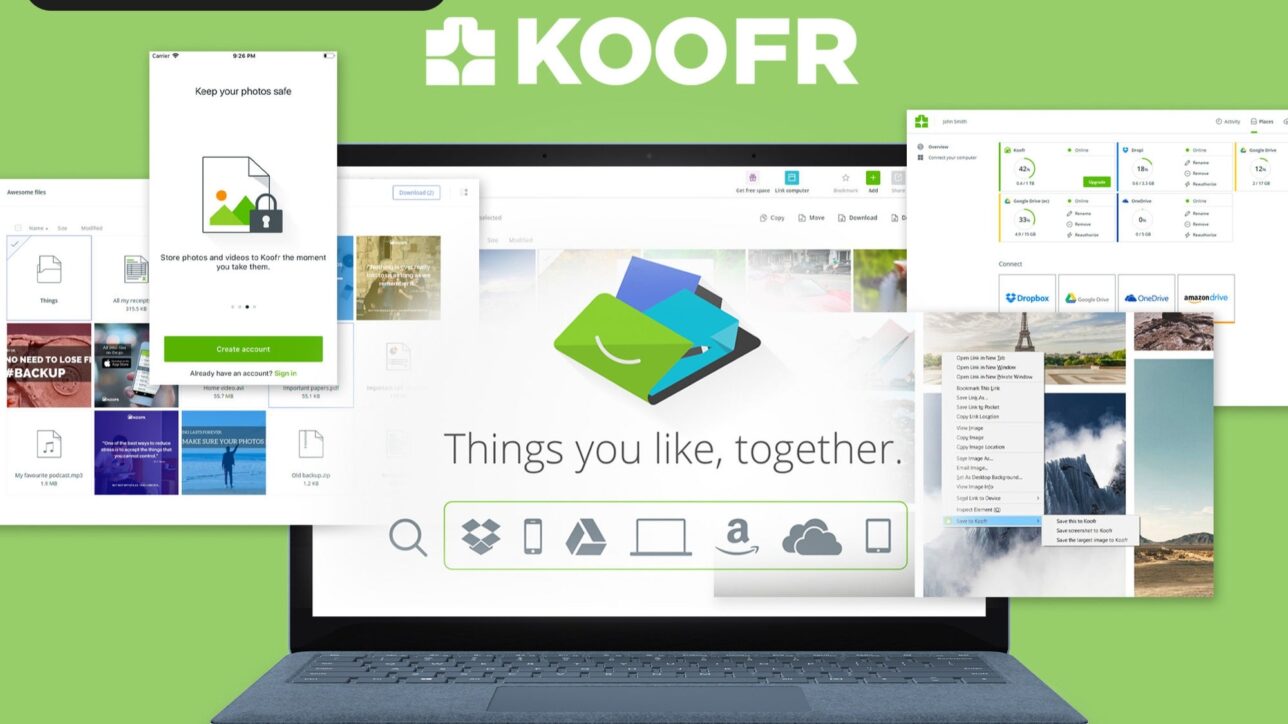
No matter who you are and what your field is, data is everything these days. From critical business documents to precious family memories, your files deserve the best protection and accessibility. That’s why this offer for lifetime access to 1TB of Koofr Cloud Storage is something every business owner (or avid family photographer) should consider.

For a limited time, you can get an extra $40 off with code Koofr at checkout and pay the one-time price of just $119.97 (reg. $810). Not sure what 1TB means in reality? It translates to around 200,000 pictures or a million documents. And unlike other cloud storage services that require ongoing payments, Koofr offers a lifetime subscription for this one price.

Koofr’s built-in Duplicate Finder helps you identify and remove duplicate files within your storage. This tool ensures you use your storage space efficiently, eliminating unnecessary clutter. The advanced file management feature also empowers you to organize and access your files for a more streamlined experience.

In an era where data privacy is a growing concern, Koofr offers a refreshing approach. It says it is the only cloud storage provider that does not track user activities, giving you peace of mind that your data and actions remain private. For privacy-conscious individuals, this is a significant advantage that sets Koofr apart from other cloud storage providers.

This cloud storage solution also goes beyond traditional service by allowing users to connect and access files from existing cloud accounts like Dropbox, Google Drive, Amazon, and OneDrive. This integration provides centralized access to all your files across multiple platforms, making it easier to manage your data from one convenient location.

Koofr has earned a stellar reputation for reliability and performance. With 4.3/5 stars on Trustpilot, you can trust Koofr to protect your valuable data.

Get lifetime access to 1TB of Koofr Cloud Storage for just $119.97 when you use the code KOOFR at checkout through September 3.

StackSocial prices subject to change.

[ad_2]

Source link

Taco Bell Breakfast Could Disappear From Some Locations

[ad_1]

Taco Bell, the #1 franchise on the 2024 Franchise 500, is giving its franchisees the option to discontinue breakfast service. This move reflects changing consumer behaviors and the challenges of the competitive breakfast market. Starting in October, franchisees can choose whether or not to continue offering breakfast items, marking a departure from the chain’s previous stance on the importance of breakfast as a growth driver.

Related: Considering franchise ownership? Get started now to find your personalized list of franchises that match your lifestyle, interests and budget.

Taco Bell, which recently launched The Cantinas, a Taco Bell-themed “early retirement community” in San Diego accessible only to its Rewards Members, first introduced breakfast in 2014. The brand positioned itself as a disruptor in the fast-food breakfast segment, traditionally dominated by giants like McDonald’s and Dunkin’.

The brand quickly gained traction through an extensive marketing campaign and offerings like the Breakfast Crunchwrap. However, the breakfast market has proven to be more challenging than anticipated, especially as consumer habits have shifted in the post-pandemic era.

One of the primary reasons behind the decision is the inconsistency in breakfast performance across different markets. Although some locations see strong morning traffic, others struggle to attract customers during the early hours. By allowing franchisees to opt-out, Taco Bell aims to empower operators to make decisions that best suit their local markets.

Related: The Critical First 100 Days of Onboarding — What You’re Likely Overlooking That Could Make or Break Your New Hire

Another factor influencing this decision is the operational complexity and costs of maintaining breakfast service. Serving breakfast requires early staffing, additional training and managing supply chains for breakfast-specific ingredients. For locations with minimal breakfast sales, these costs can outweigh the benefits, making it a less attractive option for franchisees.

This move is part of a broader trend in the fast-food industry, where brands are increasingly allowing franchisees more autonomy to adapt to local market conditions. Although Taco Bell is scaling back on breakfast in some areas, the chain continues to innovate in others, with new menu items and digital initiatives to enhance the customer experience.

Related: Find Out Which Brands Have Ranked on the Franchise 500 for Longest, Earning a Spot In our New ‘Hall of Fame’

This flexibility could mean better profitability and more tailored operations for franchisees, allowing them to focus on what works best in their specific markets.

Read More: Nation’s Restaurant News

[ad_2]

Source link

Goldman Sachs Recruit Wants Women Leaders in the Boardroom

[ad_1]

Women drive 70%-80% of consumer purchasing, and companies with at least one woman on their board have a higher return on equity than those that do not, the Women on Boards Project states on its website — yet women occupy just 20% of board seats globally and aren’t expected to reach gender parity for decades, according to a Deloitte report.

Cassie Burr, co-founder and executive director of the Women on Boards Project, is on a mission to change that. In February 2020, she and co-founders Sheryl O’Loughlin, Melissa Facchina and Kara Cissell-Roell launched the project to increase the number of women on the boards of private consumer companies.

Image Credit: Courtesy of the Women on Boards Project. Cassie Burr, co-founder and executive director.

A series of “interconnected” experiences helped set Burr on the path to co-founder and cultivate her commitment to uplifting women leaders.

A math major in college, Burr was recruited by Goldman Sachs and moved from Arizona to Utah to join the firm. “I was pulled into STEM-focused recruiting, women-focused recruiting,” she recalls. “I eventually helped build a training initiative globally [and joined] the leadership team of their women’s network. That helped me realize that capital markets are interesting, but what drove my passion was these human elements of an organization.”

Related: Goldman Sachs Will Pay $215 Million in Gender Discrimination Suit

From there, Burr joined an executive search firm in San Francisco, then became vice president of talent at consumer-focused private equity firm VMG Partners. The “concept of a talent partner was still quite novel” at VMG, and Burr had the chance to define what it meant in the context of the firm’s commitment to building organizations as diverse as its consumer base.

“[But] we don’t have a supply problem. There’s no dearth.”

Burr’s early professional experiences came to the fore when O’Loughlin, co-founder of organic food company Plum Organics and former CEO of Clif Bar, brought together Burr and several other women, including Cissell-Roell, Burr’s former boss at VMG, and Facchina, co-founder and general partner at Siddhi Capital.

They were all frustrated by the lack of representation of women in the boardroom, Burr recalls — and by the misguided focus on a “supply problem” with women leaders.

“We saw a lot of groups focused on what we would describe as the supply side,” Burr says. “[But] we don’t have a supply problem. There’s no dearth. There’s an incredible ecosystem of talented founders, CEOs and operators who would be amazing board directors if given the opportunity.”

Part of the issue has roots in the problematic phrase “board-ready,” according to Burr.

“There’s not a mystical threshold you reach that makes you ready,” she explains. “Every boardroom is completely different. What makes you an amazing candidate is going to vary depending on the investor, the stage of the company and what they’re trying to accomplish.”

Related: The Only Woman in the Room? That Was Me. Then I Built a Network of Career-Boosting Champions and Everything Changed.

“With private companies, you actually have more room for creativity.”

The Women on Boards Project launched with a consortium of investors dedicated to increasing the number of women in the boardroom: VMG Partners, City Capital, L Catterton, Swander Pace and more. During its first year, 20 companies committed to adding a woman or additional women to their boards.

Those initial days taught a couple of important lessons, Burr says: It’s challenging to conduct numerous board searches simultaneously, and broadening the definition of “board member” can help.

“It’s really hard to do 20 board searches at once,” Burr says. “It’s [also] hard to pick a moment in time and say, ‘We’re going to do it at that point.’ It’s driven by demand; it’s driven by open board seats, folks retiring or moving on. So the way we’ve evolved is more of an on-demand approach.”

Related: How We Increased Gender Diversity In Our Boardroom

When the demand for a new board member isn’t there — Burr admits a lot of conversations stalled when there wasn’t an open board seat and creating one would be difficult — reenvisioning what it means to sit on a private company’s board is paramount.

“With private companies, you have more room for creativity,” Burr says. “If we define that board member as someone who’s in the room, has a voice and is paid, then the piece of that equation that’s missing is voting rights, and that’s actually what matters least in private boardrooms. Very infrequently does anything ever come to a vote.”

“You want a board that represents the consumers that you’re serving.”

To date, the Women on Boards Project has helped connect 60 women with board roles, with 10 matches this year alone. The organization continues to recruit consumer investors as its sponsors. Strong word-of-mouth referrals across those investors’ portfolio companies and external entities help the project grow and hone its offering.

Needless to say, Burr knows what it takes to create a well-balanced board — and she suggests organizations keep two things in mind to do it effectively.

Related: 7 Habits of Highly Effective Boards

First, be critical of “onlyness” in the boardroom. You don’t necessarily want any one member to feel singled out, Burr says.

“In this context, I certainly mean the only woman, especially if your consumer is largely women — that’s problematic,” she explains. “You want a board that represents the consumers that you’re serving. You can also think about onlyness in other contexts, the only person of color. Again, especially if that’s a big target consumer, it’s hard to represent [those consumers] if you’re the only voice expected to speak on their behalf.”

Related: Board Diversity: Why It’s More Important Than Ever

And, once again, don’t let the reductive idea of “board-readiness” deter you from choosing a candidate who’s well-prepared in their own way.

“Don’t underestimate the grit, passion, energy and relevance of first-time board members,” Burr says. “These folks are often part of a leadership team of some of the fastest growing or newly acquired, most successful companies that will bring that incredibly relevant expertise to your boardroom.”

[ad_2]

Source link

Build Across Platforms with Visual Studio 2022 for Just $34.97

[ad_1]

Disclosure: Our goal is to feature products and services that we think you’ll find interesting and useful. If you purchase them, Entrepreneur may get a small share of the revenue from the sale from our commerce partners.

As a business owner, you know that having oversight or control over your software development process is important to staying ahead in a competitive market. Whether you’re looking to streamline your in-house development team or take on more projects independently, having the right tools is essential.

Microsoft Visual Studio Professional 2022 for Windows, now available for just $34.97 through September 3, offers a comprehensive suite of features designed to help you and your team succeed.

With Visual Studio Professional 2022, you can develop applications across multiple platforms, including mobile, desktop, and web. Leveraging powerful tools like .NET MAUI and Blazor, you can build apps that work seamlessly on different devices and operating systems. This cross-platform capability allows you to reach a broader audience without the need for multiple development environments.

Features like IntelliCode offer AI-assisted coding suggestions, while CodeLens provides insights directly into your code, helping you understand code dependencies and impacts before making changes. Live Share enhances collaboration by allowing team members to work together on code in real time, regardless of their location. These tools collectively streamline the development process, reducing time and effort while improving code quality.

For businesses handling complex projects, Visual Studio Professional 2022 offers advanced features like debugging tools and the ability to test .NET and C++ applications across various environments. This ensures your software is thoroughly tested and ready for deployment, minimizing potential issues post-launch.

Highly regarded in the industry, it has received 5/5 stars from Microsoft Choice Software and 4.6/5 stars from Capterra and GetApp.

Don’t miss out on this limited-time offer to take the reins of your development process and drive your business forward.

Pick up Microsoft Visual Studio Professional 2022 for Windows for just $34.97 (reg. $499) through September 3 at 11:59 p.m. PT.

StackSocial prices subject to change.

[ad_2]

Source link

Popmenu Revolutionizes Restaurant Ops with AI Tech

[ad_1]

Opinions expressed by Entrepreneur contributors are their own.

If there’s one commonality among restaurant operators, it’s that there is just too much to do with too little time.

That’s why Popmenu is using AI and other innovative technologies to help restaurant operators regain more of life’s most precious resource: hours in the day.

Brendan Sweeney and Tony Roy are co-founders of Popmenu, a SaaS company that helps restaurant owners navigate an increasingly complex and tech-driven industry landscape. They recently sat down with Shawn Walchef to record an episode of the Restaurant Influencers podcast.

Popmenu’s vision is not just about using technology but using it correctly. Tech should seamlessly integrate into the fabric of operations and be paired with valuable data to make life easier for restaurant owners.

In April 2024, Popmenu conducted a nationwide study of 1,000 consumers in the U.S. about their dining habits.

The company’s research found that consumers spend 10% less of their food budget on restaurants than they did previously — 30% now compared to 40% in 2022. Thirty-eight percent of those surveyed said they are spending the same as before but are now tipping less.

Related: This Legendary California Fish Market Sold $30 Million in One Year Thanks to Viral Videos – Then Caught Amazon’s Attention

As the restaurant industry faces mounting challenges, Sweeney says he’s acutely aware that simply offering great food and service is no longer enough to keep the doors open.

Establishments that adapt to the times will continue to thrive. Great food and service should always be available, but now great technology should also be included.

“The restaurants that are doing the things they need to do to stay in front of consumers are hanging in there, or they’re growing,” Sweeney says.

Sweeney emphasizes that although, unfortunately, hospitality alone can’t guarantee success anymore, adapting to the times is essential. Restaurants that resist engaging with technology and digital marketing find it increasingly difficult to keep up.

“There are too many options out there staying in front of you all the time,” he says. “I think now, more and more, it’s kind of taking shape. [Restaurants] understand more about what they need to do. They’re believing.”

Related: This Fine-Dining Titan Understands the Power of Hands-On Experience and Diversification

AI Marketing

This understanding of the industry’s shifting dynamics fuels Popmenu’s innovations.

In that April 2024 survey, Popmenu found that most restaurant operators listed “creating marketing content” as one of their most time-consuming tasks. Three-fourths said they were open to using AI to help save time when making marketing content.

That’s where Popmenu’s AI-driven content calendar, designed to ease the burden on restaurant owners, can help. It pre-populates an entire month’s worth of digital content — social posts, emails and text messages — based on the restaurant’s activities and trends.

“It turns them into editor-in-chief,” Sweeney says, and allows restaurant owners to approve or edit content without starting from scratch.

The result? Faster, cheaper and more effective content that consistently outperforms manually created alternatives.

Sweeney proudly points out that Popmenu was already leveraging AI well before the rise of generative tools like ChatGPT, positioning it perfectly to integrate these new technologies.

Related: How This Couple Transformed a Gas Station Kitchen Into a Legendary BBQ Destination

In addition to digital innovation, Popmenu co-founder and chief operating officer Roy emphasizes the importance of industry events — such as the National Restaurant Association Show, where it erected its own speakeasy — for staying connected and visible in the industry.

“We do it to learn, to meet with as many people as possible, whether it’s partners or clients,” Roy says. “We love shows. I would do more of them,” he admits, recognizing the tangible benefits these gatherings bring, including the chance to interact directly with potential clients and partners.

Together, Sweeney and Roy are not just responding to the challenges facing modern restaurants — they are proactively leading the charge, equipping businesses with the tools and strategies needed to thrive in a world where technology and engagement are critical to success.

“It is about getting in front of your fans and your potential fans as many times as possible,” Sweeney says. “Not being afraid, not being shy, not thinking you have to be perfect constantly.”

And when you add artificial intelligence into the recipe?

“The orders just follow.”

Related: If You Want to Make Millions, Ditch Your Polished Pitch and ‘Own Your Crazy’ Says This Legendary Branding Guru

About Restaurant Influencers

Restaurant Influencers is brought to you by Toast, the powerful restaurant point-of-sale and management system that helps restaurants improve operations, increase sales and create a better guest experience.

Toast — Powering Successful Restaurants. Learn more about Toast.

[ad_2]

Source link