Kullanıcı verilerini koruma altına almak için en gelişmiş şifreleme sistemlerini kullanan bahsegel giriş, gizliliğe önem veren oyuncular için güvenli bir tercihtir.

Kullanıcılarına özel ödül ve geri ödeme programlarıyla bahsegel kazanç sağlar.

Kumarhane deneyimi arayanlar için bahsegel sayfası geniş fırsatlar sunuyor.

Slotlarda kullanılan semboller genellikle tema ile bağlantılıdır; pinco giriş bu görselleri kaliteli şekilde sunar.

Her zaman şeffaf politikalarıyla bilinen bettilt güvenilir bir bahis ortamı sağlar.

The “Lazy” Entrepreneur’s Guide to AI: 5 Tools to Run Your Business on Autopilot

[ad_1]

Opinions expressed by Entrepreneur contributors are their own.

Want to run your business on autopilot and finally escape the 24/7 grind? AI is the “lazy” entrepreneur’s secret weapon, and if you’re not using it, you’re missing out on massive time savings and increased profits. In this video, I’m revealing five game-changing AI tools that can automate the most tedious parts of your business, letting you work less while achieving far more. What you’ll learn:

  • Content Research Hack: Discover a secret weapon to automate topic research and generate endless fresh ideas in minutes (plus, how to supercharge it with two other powerful AI platforms).

  • Meeting Note-Taking Ninja: Uncover the AI assistant that automatically transcribes meetings, creates action items and even speeds up podcast production.

  • Sales-Boosting Chatbot: Learn how a specific type of AI chatbot can increase your conversion rates dramatically.

  • Email Marketing Superpower: Unlock the AI platform that analyzes your campaigns, reveals hidden performance insights and helps you consistently crush your goals.

  • Ultimate Productivity System: Explore the AI-powered tool that prioritizes your tasks, automates your schedule and eliminates distractions, letting you focus on what really matters.

I’ll show you how to easily integrate these AI tools into your workflow, even if you’re not a tech wizard.

Download the free “AI Success Kit” (limited time only). And you’ll also get a free chapter from Ben’s brand new book, “The Wolf is at The Door – How to Survive and Thrive in an AI-Driven World.”

[ad_2]

Source link

Meta Fires 20 Employees For Leaking Information to the Press

[ad_1]

As of Thursday, Meta has fired around 20 employees for spilling “confidential information” to the press and other parties outside of Meta.

“We recently conducted an investigation that resulted in roughly 20 employees being terminated for sharing confidential information outside the company, and we expect there will be more,” Meta spokesperson Dave Arnold told The Verge. “We take this seriously, and will continue to take action when we identify leaks.”

Arnold said that when employees join Meta, they are made aware of the company’s strict no-leaks policy, which prohibits staff from revealing internal information.

Related: ‘There Are Repercussions’: Meta Reminds Staff of Its Strict No-Leaks Policy — That Has Since Been Leaked to the Press

Meta cracked down on leaks after Meta CEO Mark Zuckerberg held an all-hands meeting last month — and a recording leaked to multiple outlets almost immediately. That same day, The Verge also obtained an internal memo sent to staff by Meta’s Chief Information Security Officer Guy Rosen warning them against sharing confidential information.

During a company Q&A earlier this month, Meta CTO Andrew Bosworth noted the “tremendous number of leaks” from inside the company and warned employees that Meta was “making progress on catching people.” A recording of the meeting also leaked to the press.

Related: Meta Confirms It Is Doubling Executives Bonuses to ‘Motivate’ and ‘Reward Them’ a Week After Layoffs

Meta conducted performance-based layoffs on February 10 that affected 5% of its 72,000-person workforce or about 3,600 employees who weren’t meeting standards. The cuts surprised some affected workers, who said they had a “solid” track record of performance at the company.

Meta has also recently made sweeping changes to how content is moderated on Facebook, Instagram, and Threads with the decision to roll out Community Notes, a system that enables users to flag misleading content and write explanations citing their sources. The new system replaces the independent fact-checking one that Meta had in place for eight years.

[ad_2]

Source link

Business Advice: I Asked 100+ Founders of $1M-$1B Businesses

[ad_1]

What does it take to start and grow a business to $1 million? Or even $1 billion?

If you’re among the more than six in 10 (62%) of U.S. adults who want to be their own boss, you might be familiar with the basics of entrepreneurship. Still, the prospect of leaving a secure 9-5 job to go all-in on a side hustle or business can be daunting.

Hearing from founders who have already traveled the path to business success — and learning from their mistakes made and wins achieved along the way — can help prepare you for your own entrepreneurial journey.

Related: I Wish I Received This Advice as a Young Entrepreneur

Over the past four years, I’ve interviewed more than 100 successful entrepreneurs who started businesses worth $1 million to $1 billion or more.

I’ve sat down with business luminaries like Richard Branson (Virgin Group), Martha Stewart (Martha Stewart Living Omnimedia), Alexis Ohanian (Reddit), John Mackey (Whole Foods Market) and Bobbi Brown (Bobbi Brown Cosmetics, Jones Road Beauty), among so many others.

No matter how well-known the founders or their particular industries, they, like all entrepreneurs, had to push through business ups and downs to reach success on the other side.

Related: 7 Critical Pieces of Business Advice for Entrepreneurs Just Getting Started

Needless to say, their entrepreneurial careers have taught them a lot, and even if you take just one lesson from their experiences, you could be one step closer to achieving your own business goals.

Read on to see some of their best advice.

Be curious and open-minded

Martha Stewart – Martha Stewart Living Omnimedia

Stewart stresses the value of curiosity — and explains how she uses it to expand her horizons every day.

“Curiosity is certainly a character trait that I think is very important if you’re trying to understand, ‘Where is the world going? What the hell are we doing here? What are we going to do?'” Stewart says. “So I’ve always been happy to be curious. I read a lot. I travel a lot. And one of the things I try very hard to do is never drive down the same street twice if there’s an alternative so that I might see something that I’ve never seen before. And when I travel, I try to do the same thing. I try to see as much as I can in a day.”

Melissa Ben-Ishay – Baked By Melissa

Ben-Ishay isn’t afraid to admit when she doesn’t have all the answers.

“I love to be wrong,” Ben-Ishay says. “I don’t think I know everything. In fact, the older I get and the more experience I have under my belt, the less I know. And that is something I know with certainty. And I think that is an incredibly important mindset for a leader and an entrepreneur.”

Related: 3 Ways to Foster a Culture of Curiosity (and Why You Should)

Arsha Jones – Capital City Mambo Sauce

Jones didn’t grow up in a family of entrepreneurs and says she was on her own when it came to figuring out how to grow her small, home-based business. Without outside money to fund her venture or an extensive network to tap into, she took a grassroots approach instead.

Jones scanned grocery shelves for small bottled brands, “like a local barbecue sauce,” and then sent their owners an email: “I would say, ‘How did you do X? And how did you get on the store shelf?'” Jones explains. “And they would just sit down and answer any kind of questions that I had. And that was really how I jumped over a few of those hurdles, at least in the beginning.”

Image Credit: Courtesy of Capital City Mambo Sauce. Arsha Jones.

Get clear on what you want and stay true to it

John Mackey – Whole Foods Market, Love.Life

Mackey suggests entrepreneurs first figure out if they want to be startup serial entrepreneurs or builder entrepreneurs. “If you’re the serial entrepreneur, then my advice is figure out when is a good time to sell so you can go on to your next thing,” he says.

Mackey’s advice for builder entrepreneurs concerns the critical issue of venture capital. He says most venture capitalists and those in private equity will automatically assume you’re a serial entrepreneur, and “they’ll be looking to replace you.”

“If you are going to be a builder, you should be very clear with the investors that you bring in that you’re not looking to sell the business: You’re looking to build it — you hope to grow it for many years, and the exit for them will not be a sale. It’ll be an IPO,” Mackey says.

Tom Baker – Mr Black Cold Brew Coffee Liqueur

Baker says it’s important to consider your business’s unique offering, even if it slows you down temporarily.

“[I wish we’d] spent a little more time upfront thinking about how we were actually going to recruit drinkers into our brand,” Baker explains. “What will we be better at than every other liquor company? How am I going to get into [customers’] repertoire? I think we probably could have saved millions of dollars and a few years had I just spent another three months thinking about that before we started Mr Black.”

Related: How to Turn Vision Into Reality — A Step-by-Step Approach to Achieving Your Goals

Jackie Summers – Sorel Liqueur

Summers recommends taking breaks to get an accurate accounting of your goals.

“Our culture says you must keep going at 100 miles an hour at all times,” Summers says. “If you don’t have a chance to reflect, you don’t get the opportunity to see what your strengths and weaknesses are and how you’re going to compensate for both. It’s important to cocoon on a regular basis — whether [that’s] 20 minutes of meditation a day or being able to get away once every few weeks and spend some time in nature and quiet your mind. Once you have clarity, all sorts of things can move forward.”

Irene Chen and Matthew Grenby – Parker Thatch

Parker Thatch makes handbags, but its “true mission” is about giving customers a confidence boost, Chen says — a guiding principle that helps other aspects of the business fall into place.

Finding that “why” helped supercharge the company and serves as a solid defense against inevitable industry challenges, like competitors that produce knock-offs, Grenby says.

“That ‘why’ is not something that’s not easily copyable,” he explains. “If it’s not authentic, people sense that, and they value authenticity.”

Image Credit: Courtesy of Parker Thatch. Matthew Grenby and Irene Chen.

Don’t wait forever to start — do take calculated risks

Jenny Just – PEAK6 Investments, Poker Power

Just emphasizes that strategic early risk-taking can pay off in spades.

“When we talk about women taking risks, it’s not about taking bigger risks,” Just explains. “It’s just taking more risks sooner, and what poker allows you to do is take those risks in a bite-sized way.”

Johanna Hartzheim – Wildgrain

Hartzheim recommends jumping in and learning as you go.

“Just go for it because it’s something you learn while doing,” Hartzheim says. “It sounds kind of cliche, but as long as you’re motivated and passionate, you can do anything. I knew nothing about tracking, importing, all these things, but it’s not rocket science. You can learn anything or find the right people who do know these things.”

Related: You Have to Take Risks to Succeed. Here Are 4 Risk-Taking Benefits in Entrepreneurship

Kathrin Hamm – Bearaby

Hamm suggests setting a definitive timeline to put your best foot forward.

“Once you believe in a product, just take a chance and give yourself a year,” Hamm says. “It’s much more manageable if you [have] a considerable time frame where it’s like, Okay, in that year, I’m giving everything I have, 100%. Because sometimes we second guess ourselves. After [a few] months or six weeks, we don’t see the success, [and] we start doubting ourselves. You say [I have] one year, and I’m not asking if this is working. Just have tunnel vision for one year, and then reevaluate after those 365 days.”

Image Credit: Courtesy of Bearaby. Kathrin Hamm.

Embrace failure and the learning-filled journey

Payam Zamani – Autoweb, One Planet Group

Zamani notes that entrepreneurial fulfillment doesn’t have to depend on a business’s success.

“The fact is the overwhelming majority of businesses don’t survive,” Zamani says. “So you want to make that journey worth experiencing, and not just seeking an exit, seeking an IPO that may never happen. Then you feel like, ‘Ah, that was a failure.’ But if you’re making that journey something that’s worth living, you will always feel fulfilled whether or not that climax comes about in your business.”

Bobbi Brown – Bobbi Brown Cosmetics, Jones Road Beauty

Brown suggests giving entrepreneurship a shot so you don’t have to wonder “what if.”

“If you don’t try, you’ll never know,” Brown says. “I don’t believe in failure because it’s just a message that if something didn’t work out, do it differently.”

Related: 7 Ways Companies Can Harness Failure to Drive Success

Ellen Bennett – Hedley & Bennett

Bennett cautions against aiming for overnight success because a slow and steady approach brings some of the biggest gains.

“I’m a huge believer in the long game,” Bennett says. “You can start something out of your house with no money and have a viable, profitable business that you are a majority owner of many years later. And that is awesome. There’s nothing wrong with taking longer to build something great. I know our whole lives are oriented towards speed and how quickly things grow and [becoming] a unicorn, but you can be a long-game unicorn, too.”

Missy Tannen – Boll & Branch

Missy Tannen emphasizes that aspiring entrepreneurs don’t have to have it all figured out from the start.

“You don’t have to know everything day one,” she says. “You’re going to learn so much along the way, and I think if we’d realized all the things we didn’t know, we would have never started.”

Image Credit: Courtesy of Boll & Branch. Missy and Scott Tannen.

Keep your priorities in check

Alexis Ohanian – Reddit

Ohanian wants to reframe the question of what it takes to achieve work-life balance.

“I don’t think it’s about work-life balance,” Ohanian explains. “I don’t think anyone can really accomplish that. It’s not about balancing. If you’re chasing balance, you’re implying, like Thanos, [that] you’d be able to create something perfectly balanced. And the reality is work-life [is] never 50/50. You’ll never achieve anywhere close to that — nor should you. There are times in your life where you will need to focus on the career, the work. There are times in your life when you need to focus on life. It’s on a spectrum that’s ever-flowing back and forth.”

Related: 5 Priorities for Young Entrepreneurs

Do good and do well

Wemimo Abbey – Esusu

Abbey stresses that responsible entrepreneurship doesn’t have to be a zero-sum game.

“We need to find ways where we can create a win-win-win construct across the board,” Abbey says. “We really believe in this idea of justice capitalism: We can do good and do well — and it’s by no means mutually exclusive.”

Cason Crane – Explorer Cold Brew

Crane acknowledges that not every customer will support Explorer Cold Brew because of its LGBTQ+ partnerships, but he’s committed to running a business that reflects his values.

“It certainly helps keep me going every day,” Crane says. “There are things that you do as a business owner to position your business for financial success, and then there are the things you do to keep yourself excited to get out of bed every morning. And I think it’s important as a business owner to do both.”

Related: How to Make Giving Back Part of Your Brand’s DNA

Randy Goldberg and David Heath – Bombas

Goldberg and Heath say founders must ensure the mission is “fully integrated into the business.”

“Every team at Bombas is responsible for the mission in either a direct or an indirect way,” Heath says. “And I think having that so intertwined makes our employees feel good about our mission. But it also makes it so that the mission shows up in everything that we do, from customer experience interactions, to the website, to the creative, to the product. It’s so much a part of our DNA that you could never separate the mission. It’s not an afterthought.”

Image Credit: Courtesy of Bombas. David Heath and Randy Goldberg.

Lead with intention and encourage creativity

Chris Kirby – Ithaca Hummus

Kirby explains what it takes to build a company culture that promotes ideation, risk-taking and learning.

“I’ve learned that true leadership is about empathy, clear communication and creating an environment where people feel valued and empowered,” Kirby says. “So I’ve worked hard to build a culture that’s the complete opposite of what I experienced in a lot of those kitchens. I want my team to feel safe to share ideas, take risks and learn from mistakes without fear of being punished.”

Scott Tannen – Boll & Branch

Tannen says that a business leader is only as good as the people with whom they surround themselves.

“I am not the most talented person in this company by miles,” Tannen explains, “and I think that’s a mark of a great company when I can say that.”

Related: What Makes a Good Leader? Here’s What I’ve Learned After 20-Plus Years as a CEO.

Jocelyn Gailliot – Tuckernuck

Gailliot says Tuckernuck leaders strive to learn from their team members, which means listening to them.

“We constantly ask [them] questions,” Gailliot says. “I’ve been in industries before where it’s very much: ‘This is the role you play at these different hierarchical levels.’ And for us, it’s always been: ‘You’re on the team — you have amazing ideas to contribute, and we want to hear them.’ And we really do.”

Richard Branson – Virgin Group

Branson cites Virgin Unite’s The Elders, a group of independent global leaders working for peace and human rights that has included leaders like Nelson Mandela and Jimmy Carter, as an example of strong leadership.

“They’re all great listeners,” Branson explains. “They know what they’re thinking. They don’t need to hear themselves saying it out loud, and the only way they can learn is by listening to other people talk.”

Work hard to achieve the results you want

Amir Loloi – Loloi Rugs

Loloi says that the only person standing in the way of your business success is yourself.

“If you dream big and work hard, no one is there to stop you,” Loloi explains. “It’s not about the color of your skin. It’s not about your background. It’s not about your religion. It’s not about anything except about you personally: What are you willing to do? When you are given a task, how much more are you willing to add to it to deliver so much more? If you want to be someone in life, step out of the boundaries.”

Image Credit: Courtesy of Loloi. Amir Loloi and his sons.

Adriana Carrig – Little Words Project

Carrig suggests a three-pronged strategy to realize your biggest dreams.

“If you want it bad enough that you’re willing to work for it and believe in yourself, and all those things come together in this perfect trifecta, then there’s nothing you can’t achieve,” Carrig says. “So go for it.”

Related: 7 Elements of a Strong Work Ethic

Fawn Weaver – Uncle Nearest Premium Whiskey

According to Weaver, entrepreneurs need to give the business their all — or rethink it altogether.

“If you’re not going to do it with excellence and with consistency, bow out and get a job,” Weaver says. “Period. If you are going to do it with excellence and with consistency over time, don’t let anybody slow you down — no one. Just keep going after it, because the only people that fail doing it with excellence and with consistency are those who give up before they succeed.”


[ad_2]

Source link

Hi, Thanks for Reading My Column in the March/April Issue!

[ad_1]

Thanks for reading my column! I’ve been thinking a lot about how to connect better with audiences, and wanted to share some thoughts with you here.

As I promised in the video above, here are a few other ways to connect: You can connect with me on LinkedIn, where I post daily, or subscribe to my weekly newsletter full of success tips. Replies go directly to my inbox!

See you in the next issue of Entrepreneur magazine.

[ad_2]

Source link

How Much MrBeast Paid to Create Amazon’s ‘Beast Games’

[ad_1]

On the Amazon reality show “Beast Games,” contestants participated in a potato sack race, tower climbing task, and coin collection challenge, among others, as they competed for a $10 million cash prize, the single biggest prize in the history of television and streaming. The show, which aired the final episode of its first season on February 13, was Amazon’s biggest unscripted show ever, earning 50 million viewers in its first 25 days.

Now Jimmy Donaldson, the 26-year-old creator who is also known on YouTube as MrBeast, is revealing that he lost “tens of millions” of dollars on the show, but that he has no regrets about using his own money to help fill in the gaps in the show.

“I lost a ton of money filming the show,” Donaldson told Steven Bartlett on a “Diary of a CEO” podcast episode released earlier this month. “It was not a good financial decision to make ‘Beast Games’.”

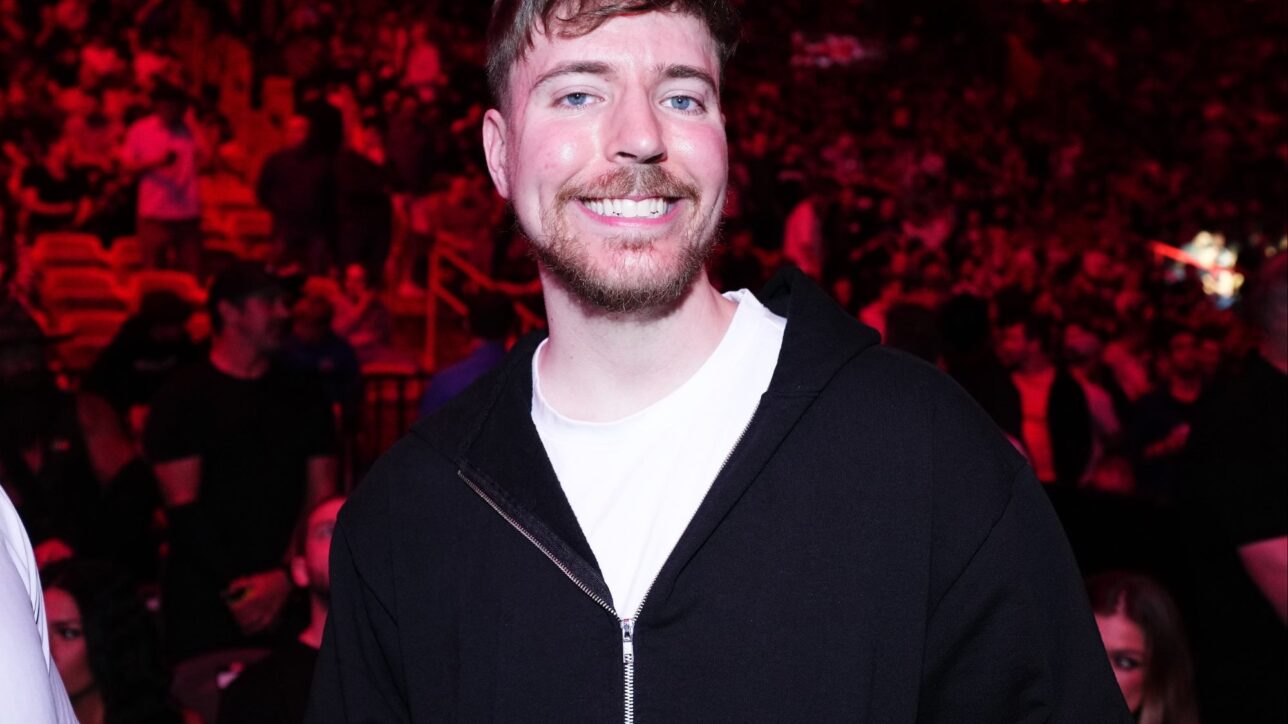
Jimmy Donaldson. Photo by Chris Unger/Zuffa LLC via Getty Images

Donaldson revealed that the first episode alone required over $15 million to construct the set, which consisted of 1,000 towers that were each 10 feet tall. The set of the second episode, meanwhile, took $14 million to build.

Related: MrBeast Has Grown Up. He Thinks His YouTube Videos Should Too.

Donaldson declined to specify how much the entire 10-episode season cost but said that the show cost more than its $100 million budget overall.

However, when Bartlett asked if he had any regrets, Donaldson said no.

“For me, it was about making season one as good as possible,” Donaldson stated. “I can’t let the YouTube community down.”

According to Donaldson, YouTube creators don’t have a good reputation when it comes to moving over to streaming platforms. He said that even he, as the YouTuber with the most subscribers in the world, struggled to garner interest among streaming executives for his show.

So the stakes weren’t just high for “Beast Games,” they were high for the YouTube community at large, Donaldson said. Now that the show is a success, doors are opening for him and other creators.

“I already know of two creators who have signed deals just based on the success of ‘Beast Games,’ and probably hundreds of millions of dollars [are] going to flow into creators’ pockets just because of ‘Beast Games’ in the next year,” Donaldson claimed.

Related: MrBeast Has Grown Up. He Thinks His YouTube Videos Should Too.

Donaldson also revealed in the interview that while he may be a billionaire on paper, he actually has less than $1 million in his bank account. Though he gives himself a salary, he ensures it is just enough to cover his personal expenses. He reinvests the rest into his brand.

Beast Games is available exclusively on Prime Video. According to Donaldson, the show attracts about 700,000 new unique viewers every day.

[ad_2]

Source link

There’s Something Top CEOs are Doing That You Might be Missing

[ad_1]

Disclosure: Our goal is to feature products and services that we think you’ll find interesting and useful. If you purchase them, Entrepreneur may get a small share of the revenue from the sale from our commerce partners.

What sets CEOs apart from the rest of us? Is it experience, education, or a knack for thinking outside the box? Whatever the answer, it often felt out of reach until now. This learning app brings the strategies and insights of top leaders and authors right to your fingertips in 15 minutes or less. Curious how it works?

Try it yourself with a Headway Premium lifetime subscription on sale for $47.99 while codes last.

Get a little smarter every day.

Too busy to read? No problem. Headway’s goal is to make reading more accessible by breaking down nonfiction books into 15-minute summaries you can read or listen to on your lunch break, during your commute, or anywhere in between.

You’ll find hundreds of book summaries on almost any topic—business, self-care, leadership, negotiation, sports, environment, and even some fiction. Lifetime access at this price won’t last long, so head to checkout now.

If you aren’t sure what to read first, check out a curated collection like “Think Like a CEO.” Read one each day to start thinking like Warren Buffet:

  • The 80/20 CEO: Take command of your business in 100 days
  • Negotiation Hacks: expert tactics to get what you want
  • The Diary of a CEO: The 33 laws of business and life
  • Leaders Eat Last: Why some teams pull together and others don’t

With lifetime access, you can look forward to new book summaries added on a regular basis. That’s probably why Headway was named the App Store’s “App of the Day’ and has over 100 positive reviews.

Buy your Headway lifetime subscription for $47.99 (reg. $299.95) while you can. Sale ends March 30 at 11:59 p.m. PT.

Headway Premium: Lifetime Subscription – $59.99

See Deal

StackSocial prices subject to change.

[ad_2]

Source link

Are You Investing Like a Gambler?

[ad_1]

Disclosure: Our goal is to feature products and services that we think you’ll find interesting and useful. If you purchase them, Entrepreneur may get a small share of the revenue from the sale from our commerce partners.

Recent reports from the specialists at North One indicate that 66.3% of entrepreneurs use their personal funds to start their companies. Your business is your life, and you put everything you can into it, but it might be less stressful if you have a healthy investment account to rely on.

If you’ve ever thought about trying day trading, you may want to improve your chances of success on the stock market with the Ultimate Candlestick Trading and Analysis Master Class Bundle. It’s available for just $24.97 until 11:59 p.m. PT on March 30.

Investing doesn’t have to feel like gambling

The bundle has eight modules showing you the ropes of informed investing strategies. Novices will want to start with Day Trading for Dummies, a step-by-step guide to everything you need to know to start day trading. It covers chart indicators and technical analysis to trading psychology and fundamental analysis, plus everything in between.

Then you can move on to the Day Trading Secrets. The bundle includes four more modules showing you how to manage volume analysis, swing trades, and earn serious profits in the stock market.

The Ultimate Candlestick Trading & Analysis Masterclass is a crowd favorite, with former students rating it 4.8 out of 5 stars. That’s where you’ll really get into the secrets that can guide your investment strategy.

No class can guarantee every investment is going to hit big, but studying can help show you how to invest like a pro.

One of the best features of this bundle is the Market Master Trading Group, where beginners and more seasoned traders can go for support and guidance from a community of experienced individuals. It provides a safe, supportive space for members to connect and share their strategies, experiences and insights. These courses are presented by Travis Rose, a full-time investor and day trader in the U.S. stock market who has been trading full-time for more than five years.

Get The Ultimate Candlestick Trading & Analysis Master Class Bundle while the price has dropped to just $24.97 (Reg. $29.99) until 11:59 p.m. PT on March 30.

StackSocial prices subject to change.

[ad_2]

Source link

What Is ‘AI Tasking’? Entrepreneurs Are Using This Viral Strategy to Save 3 Days a Week

[ad_1]

Opinions expressed by Entrepreneur contributors are their own.

Want to 10x your revenue without hiring more staff? AI is revolutionizing marketing, and if you’re not leveraging it, you’re leaving money on the table. In this video, I’m breaking down 4 powerful AI automations that can save you up to 3 days per week while scaling your business effortlessly.

What You’ll Learn:

  • Content Research on Autopilot – Find top-performing content and get fresh ideas in minutes.

  • AI Chatbots for Conversions – Boost sales and customer engagement 24/7.

  • Lead Generation Made Easy – Automate cold outreach and close more deals.

  • Sales Automation That Works – Optimize email campaigns with AI-driven insights.

I’ll show you step-by-step how to integrate AI into your marketing strategy—so you can stop wasting time on repetitive tasks and start focusing on growth.

Download the free ‘AI Success Kit’ (limited time only). And you’ll also get a free chapter from Ben’s brand new book, ‘The Wolf is at The Door – How to Survive and Thrive in an AI-Driven World.’

[ad_2]

Source link

Cameo Brings Workers Back to the Office With $10,000 Raise

[ad_1]

As companies like Amazon, JPMorgan, and Walmart implement return-to-office (RTO) mandates, one business is sweetening the deal by giving its employees a $10,000 annual raise for showing up to the office more often.

Cameo, a startup that allows users to purchase and receive personalized video messages from celebrities, began a new RTO policy this week requiring the 26 employees who work at the company’s headquarters in Chicago to be in the office Monday through Thursday, per CNBC Make It. The policy, which the company first announced to staff last month, enables employees to receive a $10,000 yearly raise in addition to free parking, a free daily catered lunch, and free access to an onsite gym.

“We really felt like we wanted to make HQ a perk, not a punishment,” Cameo CEO Steven Galanis told CNBC Make It. “We know we’re asking more out of you to give up the flexibility, and we wanted to compensate you for it.”

Related: AT&T and Sweetgreen Are Following Amazon’s Lead With Stricter Return-to-Office Mandates — Though Amazon’s Plan Has Hit a Snag

Cameo has two dozen additional employees based elsewhere in the U.S. and abroad, mainly in New York and Los Angeles. They were allowed to keep working remotely but weren’t given a pay raise.

Galanis, 37, chose to set the annual raise at $10,000 because the figure would make a “meaningful” difference in employees’ lives and hoped it would help junior employees find housing nearby instead of taking on long commutes.

The Chicago headquarters opened in the summer of 2024, but Cameo leadership never mandated a strict set of days employees had to report to the office. Workers based in Chicago previously came to the office whenever they needed to, showing up an average of two to three times per week, according to Galanis.

Cameo CEO Steven Galanis. Jose M. Osorio/Chicago Tribune/Tribune News Service via Getty Images

When Cameo informed its Chicago employees of the four-days-a-week in-office policy last month, it also gave them the option to move out of Chicago to not have to come into the office at all.

Cameo found that none of its employees quit or moved away after the announcement. Instead, the opposite happened. Some of Cameo’s remote workers based in other locations expressed interest in moving to Chicago and taking advantage of the perks offered to in-office employees.

A HealthEquity study released earlier this month surveyed more than 600 full-time employees who shifted from fully remote to hybrid or fully in-person work. Three out of four employees said their RTO experiences were positive, with 74% saying they experienced enhanced collaboration.

The top motivators for office attendance weren’t free lunches or a raise, it was professional development opportunities (50%) and team-building events (47%). The biggest obstacle to in-person work identified by the survey was commuting costs (54%).

Related: Read the Letter Sent to AWS CEO Matt Garman, Signed By 500 Employees, Protesting His RTO Comments

Cameo has experienced a tumultuous few years. The pandemic catapulted the startup to unicorn status, with a valuation of $1 billion by 2021. Sales declined by March 2024, erasing 90% of Cameo’s value.

Galanis told Time in December that he thinks the momentum has shifted in Cameo’s favor.

“I’m really grateful for our investors and our team, that they’ve believed in me and allowed us the second shot to build a company that we don’t think has reached near its potential yet,” he stated.

[ad_2]

Source link

The Mindset that Helped Me Start 5 Companies Before Age 30

[ad_1]

Opinions expressed by Entrepreneur contributors are their own.

Starting a business is often viewed as a daunting, high-risk venture. Many people dream of entrepreneurship but don’t know where to start. You may be an aspiring entrepreneur waiting for the perfect idea, enough years of experience, the right team, or significant funding to come your way. Perhaps you’re afraid that you’re too young to run your own business. But what if these barriers aren’t as important as you think?

I first became an entrepreneur in college and founded five startups in less than a decade, with valuations ranging from a million to $100 million. Now, at 27, I realize that my mindset was critical to overcoming obstacles and achieving entrepreneurial success. Below are my tips to remove mental blocks and adopt an almost irrational belief in yourself, which is necessary to push through the inevitable challenges you will face as a fledgling entrepreneur.

Related: I’m a Former Google Executive Who Chased My Future Husband Off the Subway. The Powerful Mindset I Used Can Help You Get Anything You Want.

1. Generating the right idea: Start with what you know

Instead of overthinking what the market “needs” or focusing on what others might think is a good idea, it’s best to examine your own life and identify a problem that you have personally faced. People will say there are bad ideas, but every idea is good because it brings you closer to your best idea.

Your initial concept for a product or service is just the jumping-off point. That doesn’t make or break a business as much as your ability to execute and adapt. A personal connection to the problem can help you stay motivated and focused, even when the entrepreneurial road gets tough.

Ideas that ultimately take off are typically timely and topical and address problems that no one else has figured out how to solve. I come from a family that works in law enforcement, for instance, and I co-created the app SafeStop after the death of George Floyd – a period of deep disconnect between law enforcement and the communities they serve. The app allows drivers stopped for traffic violations to chat with officers using a video call, minimizing face-to-face interactions and creating a sense of safety for both drivers and officers.

2. Execution is 90% of success

The truth is, you can’t rely solely on a groundbreaking idea. Successful entrepreneurship is 90% execution. The fear or inability to execute is often what holds entrepreneurs back. Execution isn’t about waiting for the perfect moment or gathering a team before you get started. It’s about taking action, even when you don’t have all the answers.

Ask yourself: How can I advance my goal inch by inch daily? The key is persistence. It’s not enough to wait for all the stars to align. Act now, and adapt as you go.

3. The power of irrational belief

Most people who start successful companies can appear slightly irrational at times for believing their idea will be the one to beat the odds. But the ability to remain confident and focused is a great strength.

Entrepreneurship is unique because you’re often working against probability, and you’ll likely face lots of rejection. If you’re a young entrepreneur, expect that investors, competitors and even peers may be skeptical about your odds of making it.

But you have to believe in your ability to succeed, even when things look uncertain. Even when others around you express doubts. Self-doubt can kill progress. If you don’t believe in yourself, no one else will either. You won’t be able to inspire potential investors, customers or employees.

The most successful entrepreneurs think, “I’m going to make this work, no matter what.” I have always believed that my businesses would succeed. This isn’t about being arrogant. It’s about having confidence in your ability to solve problems, learn from your mistakes and pivot.

Related: How Mindset Plays a Role in Your Entrepreneurial Success

4. Don’t let risk paralyze you

It’s important to remember that although there’s risk and some form of failure in every entrepreneurial journey, successful entrepreneurs don’t let the fear of failure stop them.

I don’t consider myself a risk-seeker. I don’t speed my car or participate in extreme sports. Coming from a finance background, I was used to downside protection: How can I protect my assets from risk?

Once I founded my own businesses, I quickly realized that while financial considerations are still important, an overly analytical mindset can paralyze you in the founding stages of a company. Don’t get so bogged down weighing every risk and its potential consequences that you’re rendered immobile.

5. Stop overthinking and start acting

Entrepreneurship often doesn’t have a clear path. You may not know exactly what your next step is, but if you wait for perfect clarity, you could wait forever.

When I learned to read growing up, I would always skip words and never read full sentences. I just read what I wanted to and knew that I could fill in the rest. These tendencies carried over into my entrepreneurial endeavors. I had little fear of jumping ahead a few steps and trusting the rest would get handled along the way.

Many entrepreneurs succeed not because they have everything figured out from the start but because they are willing to jump in and figure it out as they go. I have found this to be especially true in the world of tech startups, where quick iterations and rapid course corrections are essential. The same principle applies to any industry, though. The key is consistency and learning from each action you take, whether it leads to success or failure.

Reframe your mindset to focus on the potential for success and trust that your commitment, resourcefulness and drive will carry you through challenges.

6. Inspiration from other entrepreneurs

Looking outside of your immediate circle can also help you shift your mindset. For example, when I was in college at Stanford, I spent a semester studying abroad in Tel Aviv. Israel’s tech startup culture – its focus on innovation, work ethic, and the ability to turn any challenging situation into an opportunity for growth, inspired me to move forward with courage and conviction in creating my own companies.

Reach out to successful entrepreneurs and business leaders who can be mentors. When I created my latest company, FORE Enterprise, I developed an advisory board of business experts from Stanford, Kellogg and Wharton that I could rely on for guidance. Never be afraid to seek help and advice from others who have experience, wisdom and knowledge to share.

[ad_2]

Source link