Kullanıcı verilerini koruma altına almak için en gelişmiş şifreleme sistemlerini kullanan bahsegel giriş, gizliliğe önem veren oyuncular için güvenli bir tercihtir.

Kullanıcılarına özel ödül ve geri ödeme programlarıyla bahsegel kazanç sağlar.

Kumarhane deneyimi arayanlar için bahsegel sayfası geniş fırsatlar sunuyor.

Slotlarda kullanılan semboller genellikle tema ile bağlantılıdır; pinco giriş bu görselleri kaliteli şekilde sunar.

Her zaman şeffaf politikalarıyla bilinen bettilt güvenilir bir bahis ortamı sağlar.

Your Team Will Love This Easy-to-Use PDF Editor

[ad_1]

Disclosure: Our goal is to feature products and services that we think you’ll find interesting and useful. If you purchase them, Entrepreneur may get a small share of the revenue from the sale from our commerce partners.

PDFs are a business essential — Adobe, the creator of the file format, estimates that more than 2.5 trillion PDFs are created each year. Easily creating, editing, and converting PDF files makes doing business smooth and seamless, but to make it happen, you need the right tool.

That’s where PDF Expert comes in. This award-winning app unlocks all the PDF functionality you need to keep business going, and right now, you can get a lifetime subscription for $79.97, 42% off the $139.99 regular price.

Editing tools that do it all

There’s a reason PDF Expert was named an Editor’s Choice pick from Apple, and why more than 30 million people rely on it worldwide: It packs a comprehensive set of tools into one easy-to-use PDF editor.

That includes creating PDFs from JPGs, PNGs, Word files, Excel spreadsheets and even PowerPoints — or taking PDFs and making them into image files, editable documents, and spreadsheets and presentations.

But PDF Editor goes way beyond creation. Use the program to highlight and comment on existing PDFs or fill out forms. You can also use it to change text, or add images and links into the file. It also supports managing pages, splitting multi-page files into separate documents, and merging separate PDFs into one.

You can even use this program to enhance scanned files, and crop and split pages to suit them to your needs. And maybe most usefully of all, you can use the program to add your signature to critical documents like invoices, contracts, or agreements.

The fine print

This deal is for new users only, and is only valid for Macs. If that describes you, however, it’s a great deal — this subscription is good for use on an unlimited number of personal Mac products.

Your team already uses PDFs everyday. This is a golden opportunity to make their jobs easier and their workday more productive, for a price you won’t beat.

Get a lifetime premium plan subscription to PDF Expert for $79.97 (reg. $139.99).

StackSocial prices subject to change.

PDFs are a business essential — Adobe, the creator of the file format, estimates that more than 2.5 trillion PDFs are created each year. Easily creating, editing, and converting PDF files makes doing business smooth and seamless, but to make it happen, you need the right tool.

That’s where PDF Expert comes in. This award-winning app unlocks all the PDF functionality you need to keep business going, and right now, you can get a lifetime subscription for $79.97, 42% off the $139.99 regular price.

Editing tools that do it all

The rest of this article is locked.

Join Entrepreneur+ today for access.

[ad_2]

Source link

This $200 MacBook Air Handles Your Hustle Without Complaints

[ad_1]

Disclosure: Our goal is to feature products and services that we think you’ll find interesting and useful. If you purchase them, Entrepreneur may get a small share of the revenue from the sale from our commerce partners.

One thing to keep in mind when getting a laptop to support your professional needs is that not every job needs the latest M-series MacBook. If your goal is reliable performance, decent battery life, and that always-satisfying Apple experience—without obliterating your tech budget—this refurbished Apple MacBook Air 13.3″ (from 2017) might be exactly what you’re looking for.

At just $199.97, it’s a compelling option for entrepreneurs, frequent flyers, remote teams, or anyone needing a no-fuss, high-functioning laptop. Whether you’re outfitting new hires, building a small remote team, or just need a travel-friendly workhorse for flights and coworking spaces, this deal checks all the right boxes.

Powered by a 1.8GHz Intel Core i5 processor with 128GB SSD and Intel HD Graphics 6000, this MacBook Air can easily handle productivity apps, video calls, and browser-based work. The 13.3-inch Retina display (1440×900) gives you enough screen real estate for spreadsheets, docs, or Netflix—no judgment here.

And with Wi-Fi, Bluetooth, and a 12-hour battery, you’ve got the flexibility to work wherever you find a signal and a seat.

A business-savvy no-brainer

Sure, it’s not the newest model, but at this price, it’s a smart choice for businesses that are looking to scale or support remote productivity without buying into another $1,000 machine. It’s also ideal as a reliable secondary laptop for traveling professionals who’d rather not risk their $2,000 daily driver at airport security. It’s been cleaned and inspected, and arrives with the possibility of some light scratching or minor blemishes.

All in all, it’s a legit Apple laptop with great performance, for just $200. You’ll get what you need, save what you don’t, and maybe even impress a client or two with how resourcefully you roll.

Get a top-quality refurbished Apple MacBook Air for just $199.97 (reg. $999) with free shipping when you order through July 20.

Apple MacBook Air 13.3″ (2017) 1.8GHz i5 8GB RAM 128GB SSD Silver (Refurbished)

See Deal

StackSocial prices subject to change.

One thing to keep in mind when getting a laptop to support your professional needs is that not every job needs the latest M-series MacBook. If your goal is reliable performance, decent battery life, and that always-satisfying Apple experience—without obliterating your tech budget—this refurbished Apple MacBook Air 13.3″ (from 2017) might be exactly what you’re looking for.

At just $199.97, it’s a compelling option for entrepreneurs, frequent flyers, remote teams, or anyone needing a no-fuss, high-functioning laptop. Whether you’re outfitting new hires, building a small remote team, or just need a travel-friendly workhorse for flights and coworking spaces, this deal checks all the right boxes.

Powered by a 1.8GHz Intel Core i5 processor with 128GB SSD and Intel HD Graphics 6000, this MacBook Air can easily handle productivity apps, video calls, and browser-based work. The 13.3-inch Retina display (1440×900) gives you enough screen real estate for spreadsheets, docs, or Netflix—no judgment here.

The rest of this article is locked.

Join Entrepreneur+ today for access.

[ad_2]

Source link

Turn Your Side Hustle Into a 7-Figure Business With These 4 AI Growth Hacks

[ad_1]

Opinions expressed by Entrepreneur contributors are their own.

Most entrepreneurs are using AI the wrong way — tweaking blog posts, drafting emails and hoping it saves time. But surface-level tools won’t grow your business. What if you could use AI to build a system that runs your content, lead gen and sales — without hiring a single person?

This video reveals the four high-leverage AI growth hacks that solo entrepreneurs are using to reclaim three days a week and scale to seven figures — no tech skills required. What you’ll discover:

  • The content research shortcut top creators swear by: Uncover high-converting ideas from what’s already working in your niche — then turn those insights into original, engaging content in record time.
  • Your always-on sales assistant: Deploy a smart system that engages leads, answers questions and handles objections — boosting conversions while you focus on growth.
  • Lead generation on autopilot: Set up a full cold outreach engine that identifies ideal prospects, warms them up and keeps conversations moving — without the manual grind.
  • Revenue-boosting email intelligence: Analyze your past campaign data to reveal exactly what drives clicks and sales — then use AI to write emails that outperform your best ones.
  • The plug-and-play system behind seven-figure solopreneurs: Link these automations together to build a lean, self-sustaining business engine that grows even when you’re offline.

Everything is broken down step-by-step, no tech skills required. If you’re ready to scale your business without burning out, this is the video to watch.

Download the free “AI Success Kit” (limited time only). And you’ll also get a free chapter from my brand new book, “The Wolf is at The Door – How to Survive and Thrive in an AI-Driven World.”

[ad_2]

Source link

Best and Worst States for Retirement? Here’s the Ranking

[ad_1]

One in five Americans aged 50 and over has no retirement savings, and more than half worry that they won’t have enough money to last once they leave the workforce, according to an AARP survey.

However, where U.S. workers live can have a significant impact on their retirement readiness.

Getting familiar with some of the key averages in your state, from 401(k) balances to median incomes, life expectancies, cost of living and more, can help you understand just how prepared you are — or aren’t — for your golden years.

Related: How Much Money Do You Need to Retire Comfortably in Your State? Here’s the Breakdown.

Western & Southern Financial Group examined those metrics and others to rank all 50 states based on where retirees have the best and worst readiness for retirement.

New Jersey, Connecticut, Maryland, Virginia and Vermont came out on top for states where people are most prepared for retirement, per the study.

What’s more, residents in Connecticut and New Jersey reported the highest average 401(k) balances: $546,000 and $514,000, respectively. Residents over the age of 65 in those states also have high median incomes — over $96,000.

Related: Here Are the Best and Worst States for Retirement in 2025, According to a New Report

Americans living in West Virginia, Mississippi, Arkansas, Tennessee and Arizona may fare the worst in retirement, according to the research.

Mississippi and Arkansas residents reported some of the lowest average 401(k) balances, at $348,000 and $364,000, respectively. In West Virginia and Arkansas, residents over the age of 65 have median incomes under $58,000.

Related: These Are the States Where $1 Million in Retirement Savings Lasts the Longest (and Where You’ll Be Broke in No Time)

Check out Western & Southern Financial Group’s full ranking of Americans’ retirement readiness by state below:

Image Credit: Courtesy of Western & Southern Financial Group

One in five Americans aged 50 and over has no retirement savings, and more than half worry that they won’t have enough money to last once they leave the workforce, according to an AARP survey.

However, where U.S. workers live can have a significant impact on their retirement readiness.

Getting familiar with some of the key averages in your state, from 401(k) balances to median incomes, life expectancies, cost of living and more, can help you understand just how prepared you are — or aren’t — for your golden years.

The rest of this article is locked.

Join Entrepreneur+ today for access.

[ad_2]

Source link

Hailey Bieber’s Rhode Sells to E.l.f. for $1B

[ad_1]

Cosmetics brand e.l.f. (eyes, lips, face) is acquiring Hailey Bieber’s Rhode, the skin care brand the model and entrepreneur launched in 2022. The deal is worth $1 billion, according to a press release.

“We can’t wait to bring Rhode to more faces, places, and spaces. From day one, my vision for Rhode has been to make essential skin care and hybrid makeup you can use every day,” Bieber, 28, said in a statement. “Just three years into this journey, our partnership with e.l.f. Beauty marks an incredible opportunity to elevate and accelerate our ability to reach more of our community with even more innovative products and widen our distribution globally.”

Related: Meet the Dermatologist Behind Rhode, Hailey Bieber’s Hit Skin Care Brand

Rhode sells a selection of skin care products (toner, moisturizer, lip peptide gloss) with the goal of making “one of everything really good.” She teamed up with BeautyStat entrepreneur and chemist Ron Robinson and dermatologist Dr. Dhaval Bhanusali to help with the formulations.

“E.l.f. Beauty found a like-minded disruptor in Rhode,” said e.l.f. Chairman and CEO Tarang Amin, in a statement. “Rhode further diversifies our portfolio with a fast-growing brand that makes the best of prestige accessible. We are excited by Rhode’s ability to break beauty barriers, fully aligning with e.l.f. Beauty’s vision to create a different kind of company.”

“Rhode is a beautiful brand that we believe is ready for rocketship growth,” Amin added.

Related: Serena Williams Launches a New Company That She’s Been Working on for 6 Years

Rhode reported $212 million in net sales in the 12 months ended March 31, 2025, and plans to launch in Sephora throughout North America and the U.K. before the end of the year, according to the statement.

Bieber said she is stepping into an “expanded role of Chief Creative Officer and Head of Innovation.”

Rhode was the No. 1 skin care brand in Earned Media Value in 2024, representing 367% year-over-year EMV growth, according to the release.

E.l.f. Cosmetics was founded in 2004 (originally everything was only $1!) and has reported 23 straight quarters of growth.

The sale has been approved by the e.l.f. Beauty Board of Directors, according to the release.

Related: Is Selena Gomez the Next Beauty Billionaire? Rare Beauty, Worth Around $2 Billion, Is Reportedly Up for Sale

Cosmetics brand e.l.f. (eyes, lips, face) is acquiring Hailey Bieber’s Rhode, the skin care brand the model and entrepreneur launched in 2022. The deal is worth $1 billion, according to a press release.

“We can’t wait to bring Rhode to more faces, places, and spaces. From day one, my vision for Rhode has been to make essential skin care and hybrid makeup you can use every day,” Bieber, 28, said in a statement. “Just three years into this journey, our partnership with e.l.f. Beauty marks an incredible opportunity to elevate and accelerate our ability to reach more of our community with even more innovative products and widen our distribution globally.”

Related: Meet the Dermatologist Behind Rhode, Hailey Bieber’s Hit Skin Care Brand

The rest of this article is locked.

Join Entrepreneur+ today for access.

[ad_2]

Source link

How to Turn AI Into a Teammate, Not Just a Tool

[ad_1]

Opinions expressed by Entrepreneur contributors are their own.

A few months ago, I was stuck on an email. We were about to announce a delay in releasing a new Jotform product, and I needed to explain the “why” in a way that felt honest, optimistic and clear. Not too corporate. Not too casual. I rewrote the opening five times. Nothing was landing.

Out of frustration more than strategy, I opened up my AI assistant and typed, “Can you help me write a company-wide email about a product delay that’s transparent, reassuring and keeps the team motivated for what’s next?”

What came back was surprisingly decent. Not publish-ready, but good enough to get me moving again. Then I tried something else. “Rewrite this like you’re a product manager talking to power users.” Then again. “Now condense it into an email.” Suddenly, I wasn’t stuck anymore — I had options, tone shifts and plenty of ideas. I wasn’t working alone. I had a co-pilot.

AI has changed the way we work, but the truth is, most of us aren’t actually using it to its full potential. Here’s how to change that.

Related: 7 Ways You Can Use AI to 10x Your Leadership Skills

Shift your perception

Large language models (LLMs) like ChatGPT have been in the mainstream for a few years now, and even the most tech-averse among us have dabbled in their offerings.

According to Harvard Business Review, the most popular use of GPTs is “personal and professional support,” representing a significant shift from last year, when the reigning category was “technical assistance and troubleshooting.” In 2024, users were relying on AI for tasks like generating ideas and looking up the answers to specific questions. Now, their relationship to AI has evolved, with users treating it less like a tool and more like a teammate.

This evolution is key. The more we anthropomorphize AI — not in a sci-fi way, but in a practical, collaborative sense — the more effectively we can leverage it. At this point, I use AI to take a number of tasks off my plate, assigning it roles based on what I need done: If I want to gather stats or summarize articles, I tell it to assume the role of a research assistant. If I want a wireframe copy reviewed, I ask it to act like a UX designer. If I’m refining a pitch or strategy doc, I’ll prompt it to behave like an investor or board member, so I can pressure-test my thinking before presenting it to the real audience.

The more intentional you are about how you “cast” your AI assistant, the more value it can deliver — not just as a helper, but as a genuine extension of your thinking.

Get your prompts on point

AI isn’t magic — it’s responsive. Vague prompts beget vague answers. But with clear direction, including the tone, structure and style you want, you’ll unlock much more powerful results.

Say you want to create a blog post to announce a new feature or product. Instead of simply saying, “Write me a blog post,” make it specific. “You’re the CEO of a tech company who just launched [insert product and description]. Write a 300-500-word blog post that accurately captures the product’s features, includes key details, and explains to users how it will improve their day-to-day workflows. The tone should be confident and enthusiastic, and adhere to the company’s brand voice [examples below].

I’ve found it helpful to treat prompt engineering like managing a junior team member. Rather than scrapping the first draft, offer feedback: “Make this less technical,” “Add a real-world example,” or “Make the first paragraph more engaging.” The more specific the prompt and the revisions, the better the outcome.

Related: Why Smart Entrepreneurs Let AI Do the Heavy Business Lifting

Integrate it into your workflow

One of the biggest missed opportunities of casual AI dabblers is using it sporadically instead of systematically. With just a little bit of upfront time investment, AI has the capacity to streamline nearly every aspect of your daily workflow.

These days, even those without any coding knowledge can easily build customized AI assistants designed to lighten the load of repetitive tasks. From Claude’s “Project” to Gemini’s “Gem,” these platforms enable users to store data like detailed instructions and tone guidelines to keep from having to write the same prompt over and over.

For example, I created a scheduling and email assistant that helps me triage my inbox and prepare meeting follow-ups. It’s loaded with previous email templates, understands my preferred tone and can quickly draft context-aware replies or send a recap with action items after a meeting. Because it’s trained on how I typically communicate and prioritize, it feels less like a chatbot and more like having a highly-responsive personal assistant.

My advice? Start small. Choose one recurring task — something low-lift but time-consuming — and assign it to your AI assistant. Give it structure, test it out and offer feedback as you go. Before long, these automated assistants will start to feel like invisible team members working behind the scenes to keep you focused on what matters most.

A few months ago, I was stuck on an email. We were about to announce a delay in releasing a new Jotform product, and I needed to explain the “why” in a way that felt honest, optimistic and clear. Not too corporate. Not too casual. I rewrote the opening five times. Nothing was landing.

Out of frustration more than strategy, I opened up my AI assistant and typed, “Can you help me write a company-wide email about a product delay that’s transparent, reassuring and keeps the team motivated for what’s next?”

What came back was surprisingly decent. Not publish-ready, but good enough to get me moving again. Then I tried something else. “Rewrite this like you’re a product manager talking to power users.” Then again. “Now condense it into an email.” Suddenly, I wasn’t stuck anymore — I had options, tone shifts and plenty of ideas. I wasn’t working alone. I had a co-pilot.

The rest of this article is locked.

Join Entrepreneur+ today for access.

[ad_2]

Source link

This Hidden Retail Tech Is Transforming Customer Experiences

[ad_1]

Opinions expressed by Entrepreneur contributors are their own.

In retail, the concept of customer experience (CX) is typically framed through a consumer-facing lens — think loyalty apps, curbside pickup or influencer-driven TikTok campaigns. But the real transformation of CX in the post-pandemic era isn’t happening in apps or ads. It’s happening in the unglamorous trenches of store operations — through workforce tools, communications systems and intelligent infrastructure that the average customer may never even notice.

What’s emerging is a new truth: The future of CX is operational. And the companies quietly reshaping it aren’t your usual suspects.

Related: The 6 Essential In-Store Experiences That Your Customers Want to See

From flashy to functional

In the early 2010s, retail tech was dominated by bold digital concepts designed to “surprise and delight” the shopper. Magic mirrors. Augmented reality. Endless aisle touchscreens. Most of these either flopped or became museum pieces in a few flagship stores. They failed not because they were uncreative, but because they were disconnected — from operations, from employees and from the shopper’s actual intent.

What today’s most innovative retail technologies have in common is subtlety. They don’t shout for attention; they support it. They equip frontline teams with faster information, they adapt to real-world constraints like store layouts and staffing realities, and they improve performance metrics that most shoppers will never ask about but always feel.

Let’s take a closer look at how this shift is playing out.

1. The rise of retail communications infrastructure

A shopper enters a store with a question — say, whether a jacket is available in another size. A decade ago, the employee might leave the customer waiting while they “go check in the back,” perhaps never to return. Today, with voice-controlled mobile communication tools, that same employee can instantly ping the stockroom team without taking a single step away. Within seconds, the customer has their answer.

What this technology enables is more than a productivity boost. It’s a moment of trust. A micro-interaction where a shopper feels heard, respected and helped — without the friction that defines so many in-store experiences. It’s frontline enablement as CX, and it’s catching on fast.

And while tools like these improve person-to-person communication on the floor, other solutions focus on the digital touchpoints customers encounter throughout the store — promotional screens, endcap displays and in-aisle messaging. These systems help major retailers manage these assets across thousands of locations, keeping content synchronized, compliant and up to date as campaigns change.

When the system is working, the store feels intuitive: Offers make sense, signage matches what’s on the shelf, and the experience runs smoothly. When it’s not, shoppers may not pinpoint the problem, but they notice the friction — and it quietly erodes confidence in the brand.

Related: How Technology is Improving Retail Business

2. The shopper sees the surface. Operations define the substance.

There’s a certain irony in modern retail: The more seamless an experience feels, the more operational complexity is likely happening behind the scenes. You can’t staff a store like it’s 2015 and expect to win on experience in 2025. Yet, that’s still the reality for many brands struggling with turnover, outdated scheduling systems and lack of execution.

This is where workforce optimization solutions play a crucial role — providing the workforce intelligence and operational backbone that modern retailers need to keep stores running efficiently. By forecasting demand more accurately, aligning staffing to actual foot traffic and helping managers execute daily tasks without the usual chaos, they’re helping retailers deliver on the promises their ads make. And perhaps more importantly, they’re restoring sanity to the employee experience — a deeply overlooked component of CX.

After all, burned-out workers don’t deliver exceptional service. They follow the script, if you’re lucky. But a team that’s well-staffed, well-informed and empowered? That’s the secret sauce behind any successful in-store experience.

3. Infrastructure that moves with the customer

Retail environments have always been built for stability — fixed shelves, anchored signage, permanent displays. But shoppers are increasingly fluid. Planograms shift monthly. Promotions change weekly. And in pop-up or seasonal formats, store layouts are reinvented overnight.

Traditional digital signage — especially fixed, hardwired displays — can be limiting in dynamic environments. As store layouts shift or temporary formats emerge, retailers increasingly need solutions that can move and adapt just as quickly. That’s where innovative portable display technologies are shifting the paradigm. These battery-powered, cordless solutions are purpose-built for agility. No cords. No construction. No waiting weeks for installation.

What this enables isn’t just convenience — it’s responsiveness. A retailer can reposition signage based on observed foot traffic patterns, launch a flash sale at a specific display or bring product education directly to the point of decision — all without waiting for IT tickets to clear or maintenance crews to arrive.

It’s a subtle but powerful idea: making digital signage behave more like merchandise. It moves. It adapts. It responds.

Related: How to Write an Operations Plan for Retail and Sales Businesses

4. Why this shift matters now

We’re entering an era where the margin between customer loyalty and abandonment is razor-thin. Shoppers don’t give second chances the way they used to. If an in-store experience feels disjointed, slow or inattentive, they go elsewhere — or back online.

At the same time, retail teams are being asked to do more with less. Labor shortages. Shrinking budgets. Rising expectations. There’s no room for bloated tech that dazzles but doesn’t deliver.

That’s why the “silent revolution” matters.

These operational technologies aren’t designed just to dazzle; they’re built to remove friction. Some may look impressive, even attention-grabbing, but their real value is in how seamlessly they empower employees, streamline execution and support smarter customer interactions.

In the end, the best customer experience isn’t one shoppers post about; it’s one they don’t have to think about. The store just works. And more and more, it’s the technology behind the scenes — well-placed screens, real-time communication, smarter staffing — that makes that kind of experience possible.
[ad_2]

Source link

Ultimate Email Backup Solution | Entrepreneur

[ad_1]

Disclosure: Our goal is to feature products and services that we think you’ll find interesting and useful. If you purchase them, Entrepreneur may get a small share of the revenue from the sale from our commerce partners.

According to Guidant Financial, we’ll be seeing a lot more digital transformation and innovation as more Millennials and Gen X become business owners. That means communication tools will only become even more important. Mail Backup X is hard to beat if you want the best product for email management, backup, archiving, and conversion. Best of all, a lifetime subscription is now available to new users for just $49.99, plus, you can use coupon code SAVE20 at checkout for an additional 20% off.

Emails are easily the most critical part of daily communications and activities for most organizations and individuals. Don’t wait until crucial emails are lost to implement a robust backup solution; you need to plan to keep your mail data safe. Mail Backup X is trusted by over 42,000 home users and businesses worldwide as a one-stop solution for all your email needs.

Backing up your emails is a breeze from all the major email clients, including Microsoft Outlook, Office 365, Microsoft Exchange, Apple Mail, Thunderbird, and more. You can also backup from mail services like Gmail, Yahoo, Outlook.com, or any service that supports the IMAP protocol. You also get mirror backup with a USB drive or cloud services like Google Drive, Dropbox, OneDrive, and more. Restoring is just as easy, directly to the server account or a different server account.

Your archives will be highly compressed to save up to three times the storage space. You’ll also have an archive file viewer to search and view your archived emails quickly. Import most mail archive files, such as .pst, .ost, .mbox, .olk, and more.

You can even move all emails into a new account in Office 365 for 100% privacy. Your data is secured with military-grade AES 256-bit encryption with your private key, so everything is visible only to you.

It’s no wonder that Mail Backup X is rated 4.8 out of 5 stars on AppSumo, and CNET gives it a perfect 5-star rating.

Get a lifetime subscription to the Individual Edition of Mail Backup X, available to new users for just $39.99 when you use coupon code SAVE20 at checkout.

StackSocial prices subject to change.

According to Guidant Financial, we’ll be seeing a lot more digital transformation and innovation as more Millennials and Gen X become business owners. That means communication tools will only become even more important. Mail Backup X is hard to beat if you want the best product for email management, backup, archiving, and conversion. Best of all, a lifetime subscription is now available to new users for just $49.99, plus, you can use coupon code SAVE20 at checkout for an additional 20% off.

Emails are easily the most critical part of daily communications and activities for most organizations and individuals. Don’t wait until crucial emails are lost to implement a robust backup solution; you need to plan to keep your mail data safe. Mail Backup X is trusted by over 42,000 home users and businesses worldwide as a one-stop solution for all your email needs.

Backing up your emails is a breeze from all the major email clients, including Microsoft Outlook, Office 365, Microsoft Exchange, Apple Mail, Thunderbird, and more. You can also backup from mail services like Gmail, Yahoo, Outlook.com, or any service that supports the IMAP protocol. You also get mirror backup with a USB drive or cloud services like Google Drive, Dropbox, OneDrive, and more. Restoring is just as easy, directly to the server account or a different server account.

The rest of this article is locked.

Join Entrepreneur+ today for access.

[ad_2]

Source link

Simplify Investing With Stock Recommendations App

[ad_1]

Disclosure: Our goal is to feature products and services that we think you’ll find interesting and useful. If you purchase them, Entrepreneur may get a small share of the revenue from the sale from our commerce partners.

Need to raise capital to grow your business? The stock market is a great way for entrepreneurs to do just that. According to Gallup.com, 42.5% of entrepreneurs are buying and trading stocks. If you’d like to take part and start investing smarter, this lifetime subscription to Sterling Stock Picker is currently on sale for $55.19 with code SAVE20 through June 1.

This app makes the stock market accessible for everyone

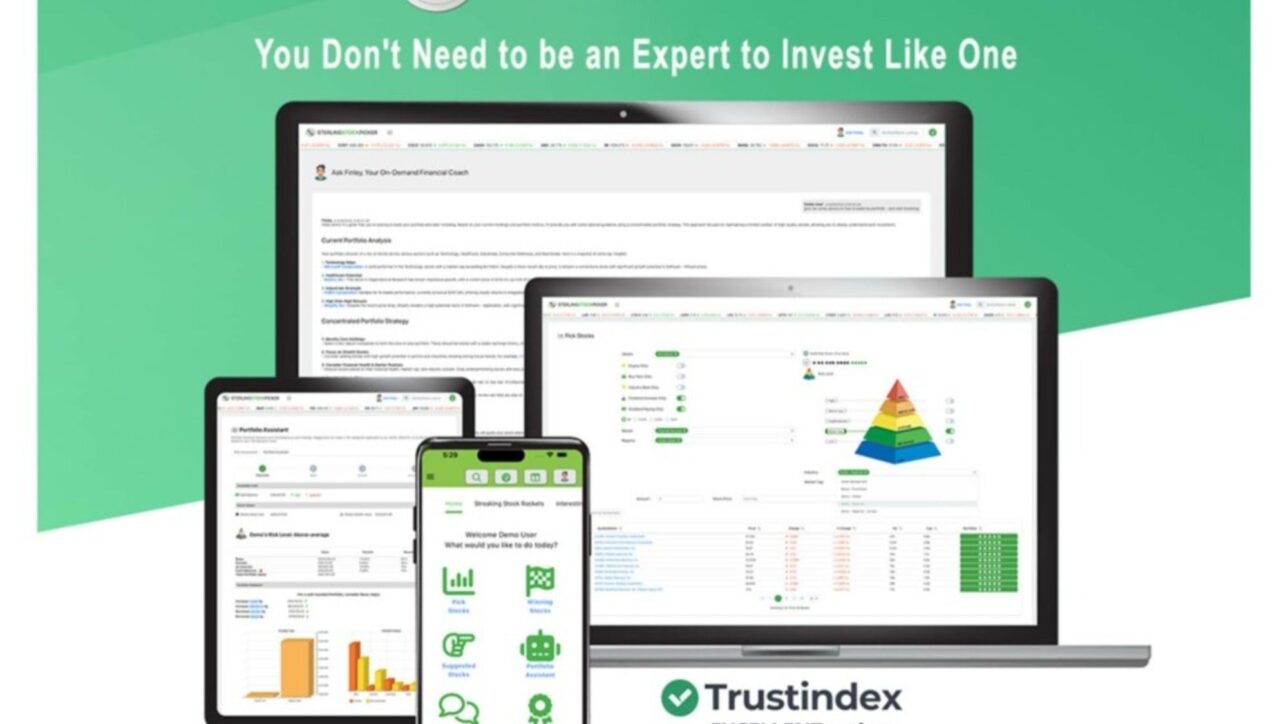
If you’ve always wanted to use the stock market to your advantage, but haven’t been sure where to start, Sterling Stock Picker is here to help. This award-winning platform was created to make the stock market more accessible to everyone, with no expertise needed.

Sterling Stock Picker uses different methods to select winning stocks for your portfolio, making sure they line up with your personal values, investment preferences, and risk tolerance so that you can make solid decisions. You just take a five-minute questionnaire to get started, and watch as the done-for-you portfolio builder makes investing straightforward.

Their patent-pending North Star technology also gives clear guidance on when to sell, buy, hold, or avoid certain stocks. You’ll also get access to Finley, your very own personal AI financial coach, to help you reach your financial goals. Ask Finley for strategic investment advice, risk assessment, educational support, or questions about your portfolio or the stock market in general.

Real-life user Chris raved about Sterling Stock Picker, sharing, “I have been using the Sterling Stock Picker for almost a year and it has played an integral part in me achieving over a 200% return on my investments.”

Start your own stock market journey with this lifetime subscription to Sterling Stock Picker, now $55.19 with code SAVE20 through June 1.

StackSocial prices subject to change.

Need to raise capital to grow your business? The stock market is a great way for entrepreneurs to do just that. According to Gallup.com, 42.5% of entrepreneurs are buying and trading stocks. If you’d like to take part and start investing smarter, this lifetime subscription to Sterling Stock Picker is currently on sale for $55.19 with code SAVE20 through June 1.

This app makes the stock market accessible for everyone

If you’ve always wanted to use the stock market to your advantage, but haven’t been sure where to start, Sterling Stock Picker is here to help. This award-winning platform was created to make the stock market more accessible to everyone, with no expertise needed.

The rest of this article is locked.

Join Entrepreneur+ today for access.

[ad_2]

Source link

7 AI Tools to Build a Profitable One-Person Business That Runs While You Sleep

[ad_1]

Opinions expressed by Entrepreneur contributors are their own.

Most entrepreneurs are still using AI like an assistant, stuck on surface-level tools that save a few minutes here and there. But what if AI could actually run your business for you, while you sleep?

This isn’t about chatbots or repurposing content. It’s about building a lean, one-person business powered by automation, speed and smart systems.

In this video, I’m revealing seven high-leverage AI tools curated for solo entrepreneurs ready to scale without a team and finally unlock true freedom.

What you’ll learn:

  • Website conversion and sales amplifier: Discover a free Google AI tool that audits your site like a conversion expert, spotting costly mistakes and giving you data-backed recommendations to boost leads and sales (no coding required).
  • Hidden market insights at your fingertips: Uncover the AI research engine that reveals untapped market gaps and competitor weaknesses in seconds, without spending $200/month on bloated SEO software.
  • No-code agent creation made simple: Learn how to build your own AI agents to automate client onboarding, handle admin tasks, and even make smart decisions — freeing up your time for growth and strategy.
  • Instant presentation builder: Turn any blog, transcript or outline into a polished, professional deck in minutes — perfect for selling ideas, landing clients or creating lead magnets on autopilot.
  • Social media intelligence extractor: Access a pre-trained AI bot that scrapes platforms for viral trends, top-performing posts, and competitor engagement data, giving you a content edge without guesswork.
  • Data reporting on autopilot: Use the same AI analysis tool trusted by universities to transform raw numbers into smart, visual insights — ideal for optimizing campaigns, funnels and offers.
  • The ultimate solo founder AI toolkit: Explore the “app store of AI” where you can clone voices, analyze sentiment, and plug into hundreds of advanced tools that extend what one person can achieve.

I’ll walk you through each tool step-by-step, no tech background needed. If you’re ready to build a high-performance business that works while you sleep, this video is your blueprint.

Download the free “AI Success Kit” (limited time only). And you’ll also get a free chapter from my new book, “The Wolf is at The Door – How to Survive and Thrive in an AI-Driven World.”

Most entrepreneurs are still using AI like an assistant, stuck on surface-level tools that save a few minutes here and there. But what if AI could actually run your business for you, while you sleep?

This isn’t about chatbots or repurposing content. It’s about building a lean, one-person business powered by automation, speed and smart systems.

In this video, I’m revealing seven high-leverage AI tools curated for solo entrepreneurs ready to scale without a team and finally unlock true freedom.

The rest of this article is locked.

Join Entrepreneur+ today for access.

[ad_2]

Source link